
Hot Water System: Repair or Replace?
Your hot water's playing up and you're facing the question every homeowner dreads: patch it up, or start fresh? Here's an honest framework — the five questions that decide it, the 50% rule, and when replacing is genuinely the better money.
Making the repair or replace hot water system call
The repair or replace hot water system decision isn't really about the fault in front of you — it's about whether the system has the years left to justify fixing it. A cheap fix on a system near the end of its life just buys a few months before the next failure; an expensive fix on a nearly-new system is almost always worth it.
The honest answer comes from weighing the repair cost against the system's age, its condition and the value of replacing — and sometimes a rebate tips a borderline call toward replacing. Here's how to work through it.
See also: repairs
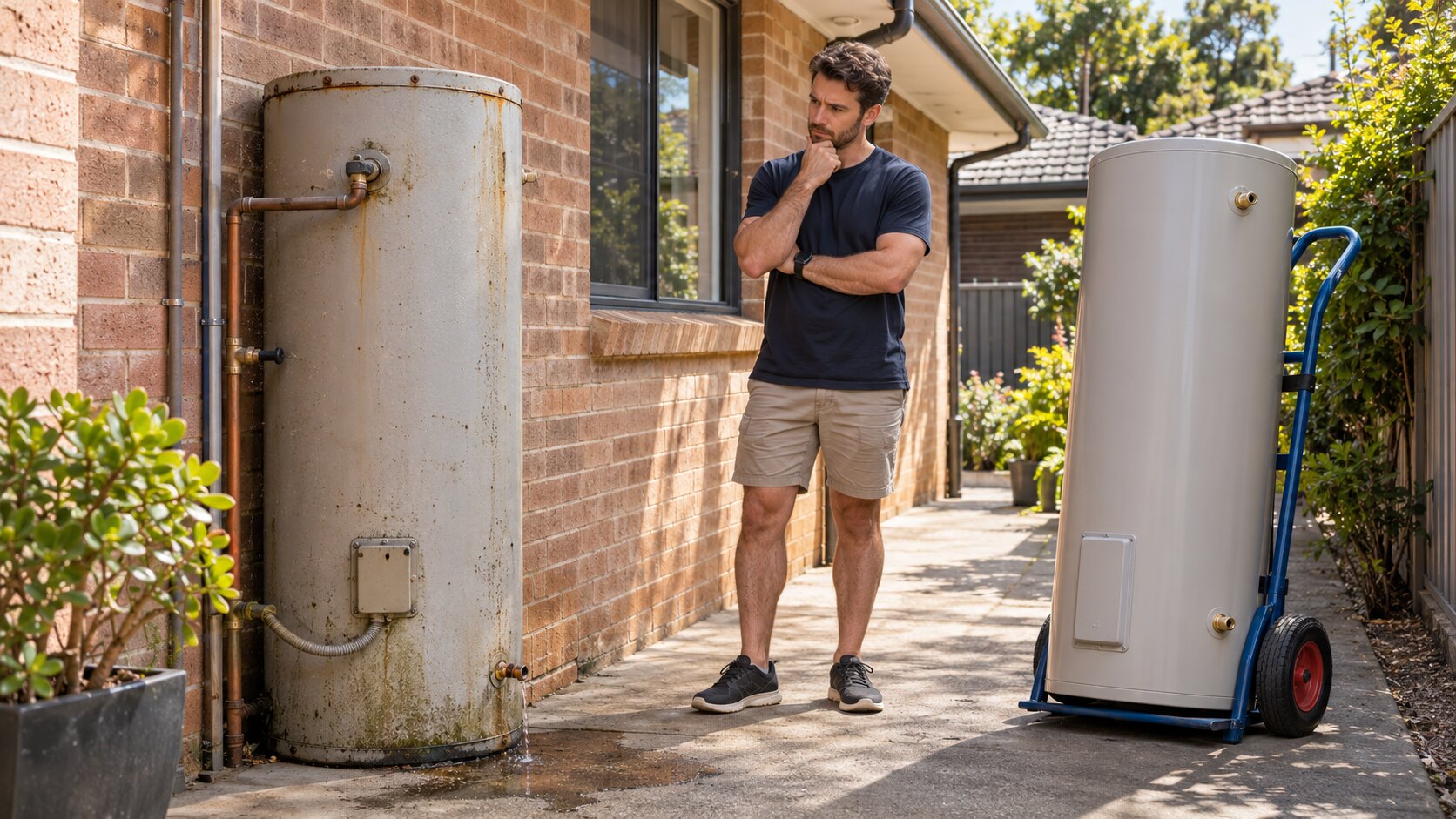
The 5 questions that decide it
Run the fault through these and the answer usually becomes obvious.
1 · How old is it?
Past 80% of its expected life (see the table below), lean toward replacing — more failures are coming regardless of this fix.
2 · What's the repair cost?
Apply the 50% rule: if the repair is more than half the price of a new system installed, replacing is the better money.
3 · Is it the first or fifth fault?
A first fault on a healthy system is worth fixing; a pattern of repairs is the system telling you it's done.
4 · Is it leaking from the tank?
A leaking tank body (not a valve) can't be repaired — that's a replacement. A leaking valve usually can.
5 · Would a rebate change it?
Replacing an old electric or gas system with a heat pump unlocks the NSW and federal rebates — which can make replacing better value than a big repair on a tired system.
System age — when to start thinking replace
Expected lifespans by type. Once yours is in the upper part of its range, factor that into the decision.
| System type | Expected life | Start considering replacement |
|---|---|---|
| Electric storage | 8–12 years | From ~8 years |
| Gas storage | 10–12 years | From ~9 years |
| Gas continuous flow | 15–20 years | From ~14 years |
| Heat pump | 10–15 years | From ~10 years |
| Solar (tank) | 10–15 years | From ~11 years |
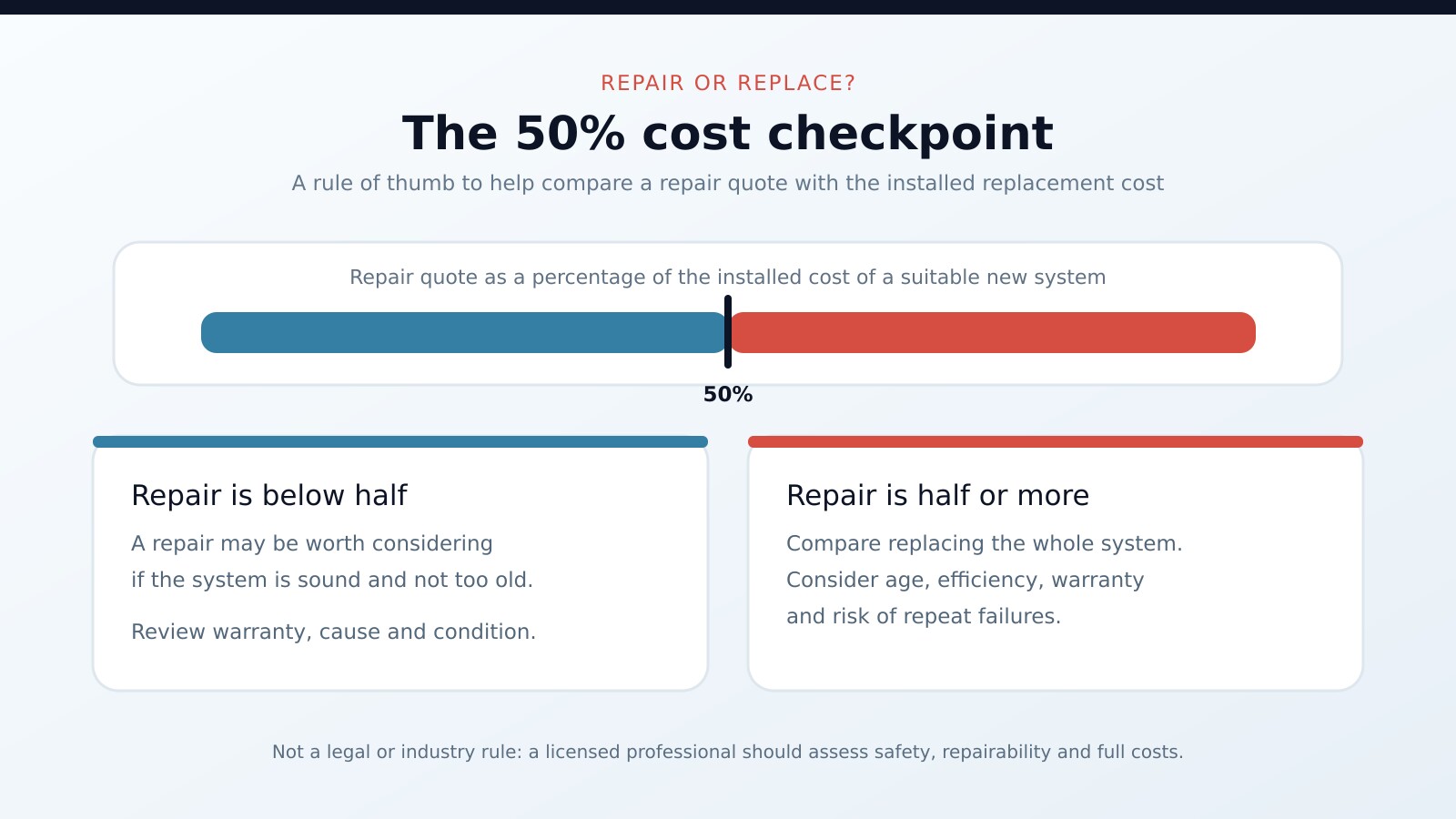
When to repair, and when to replace
Most situations fall clearly into one of these two once you've run the questions.
Repair makes sense when...
- The system is well within its expected life.
- It's a first fault, and a valve or part — not the tank.
- The repair is well under half a new system's price.
- It's otherwise healthy and serviced.
Replace makes sense when...
- It's past ~80% of its expected life.
- The tank body is leaking, or faults are repeating.
- The repair is more than half a new system.
- A rebate brings a better system within reach anyway.
When a rebate tips it toward replacing
A rebate can turn a borderline repair into an easy replace.
Here's the factor people miss: if you're on an old electric or gas system, replacing with a heat pump attracts the NSW and federal rebates — which can bring a new, far cheaper-to-run system down to close to the cost of a major repair plus a few more years of high bills. On a borderline call, that often makes replacing the smarter money.
If you're not sure where your system sits, start with its lifespan, then get an honest look. We'll tell you straight whether a repair is worth it or a replacement is the better call — and we do both, so there's no sales angle either way.
See also: replacement · lifespan

Repair or replace, answered
The questions we're asked most when a system plays up.
Should I repair or replace my hot water system?
What is the 50% rule for hot water systems?
Is it worth repairing an old hot water system?
Can a leaking hot water tank be repaired?
How do I know my hot water system is at end of life?
Should I replace with the same type or upgrade?
Get honest advice
We'll look at your system and tell you straight — repair if it's worth it, replace if it's not, with the rebates factored in. Sydney-wide, and we come to you.