
Hot Water Smells & Noises: What's Normal and What's Not
Rotten-egg smell, rusty water or a banging tank are your hot water system telling you something. Most are a service issue — a spent anode or sediment — not a disaster. Here's what each one means.
What the smell or noise is telling you
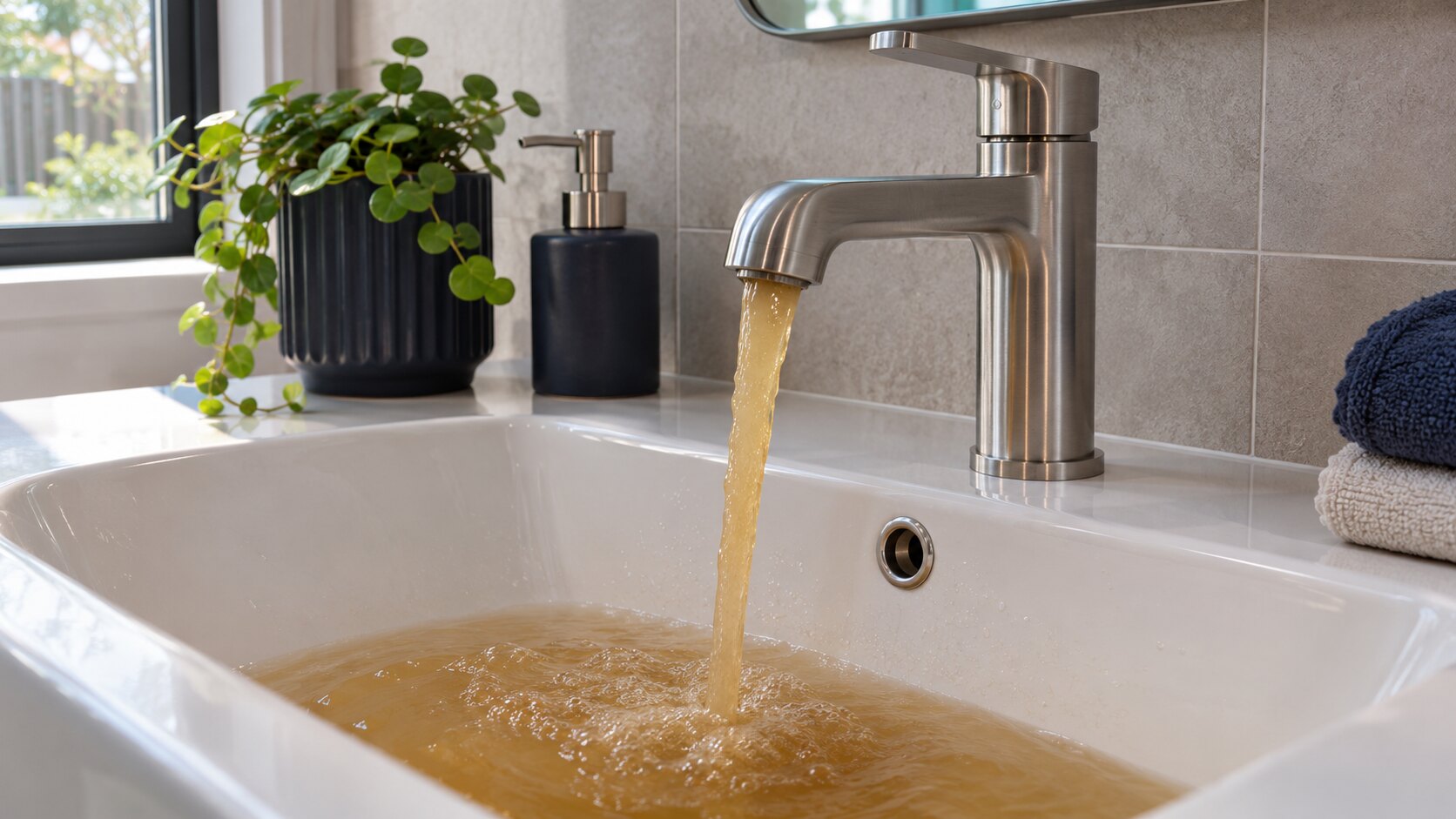
When your hot water system smells, runs rusty, or bangs, it's telling you something. Hot water that smells like rotten eggs, runs rusty or discoloured, or a system that bangs and rumbles are all signs of what's happening inside the tank. A rotten-egg smell is usually a reaction between the sacrificial anode and bacteria in the water; rusty or discoloured hot water points to sediment or a tank starting to corrode; and a noisy hot water system — banging, rumbling or popping — is typically sediment build-up on the bottom of the tank boiling under the element.
None of these is usually an emergency, but they're the tank asking for a service — and ignoring them (a spent anode especially) is how a tank rusts out years early.
What's probably causing it
Ranked by how often we see it — tell us which sounds like yours and we'll come prepared.
Rotten-egg smell
A reaction between the sacrificial anode and bacteria in the water produces the smell. The fix is usually an anode change (sometimes to a different type) and a flush.
Rusty or discoloured hot water
Sediment stirred up in the tank, or early internal corrosion, discolours the hot water. A flush helps; persistent rust can signal a tank nearing end of life.
Banging or rumbling tank
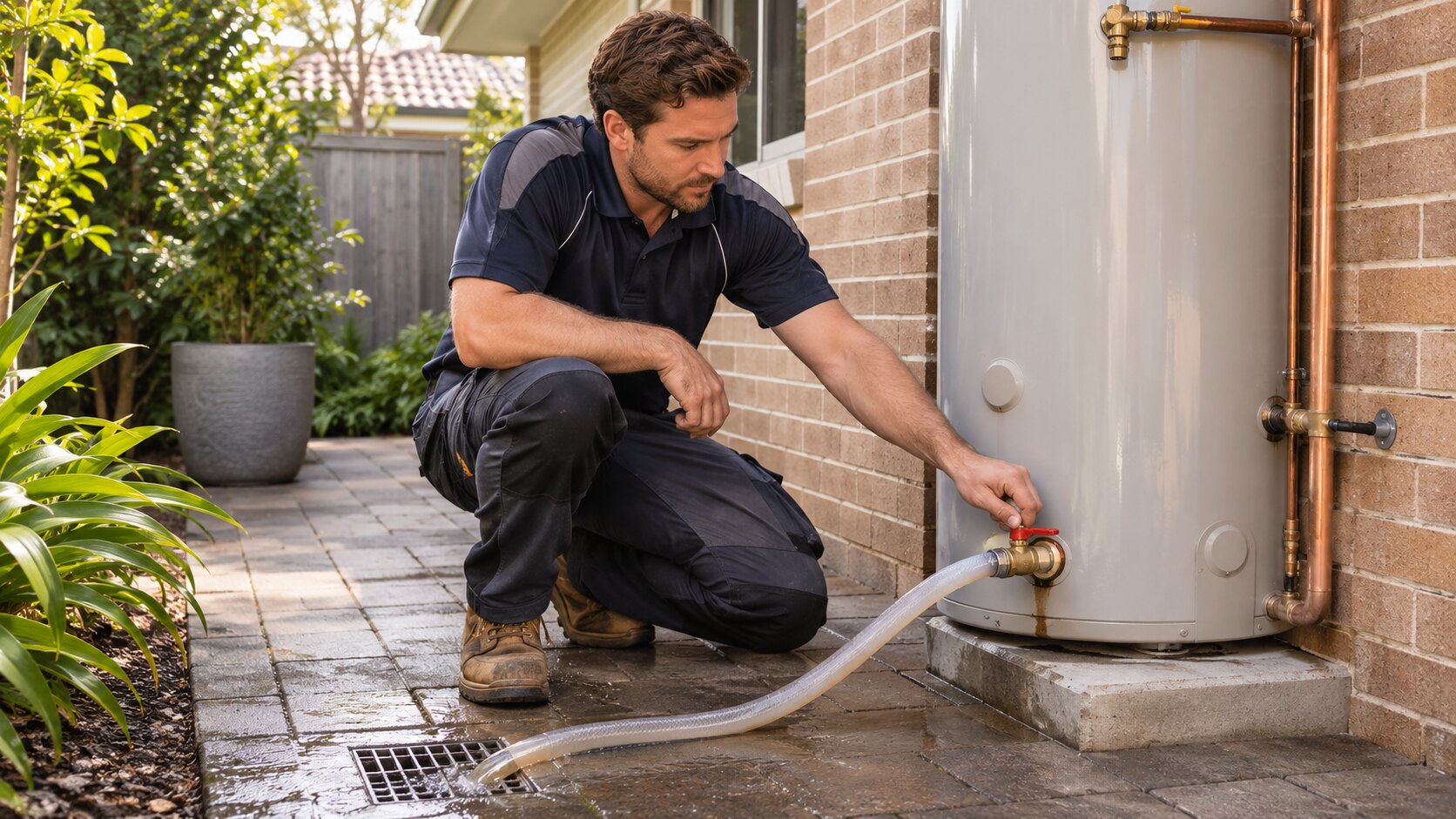
Sediment on the tank base boils and rumbles under the element — noisy but a sign the tank needs flushing before the sediment shortens its life.
Spent anode
The sacrificial anode protects the tank from rust. Once spent it stops protecting — and smells and discolouration often follow. Replacing it in time adds years.
Kettling / scale (hard water)
Scale build-up on the element causes a kettling noise and reduces efficiency, common in harder-water areas.
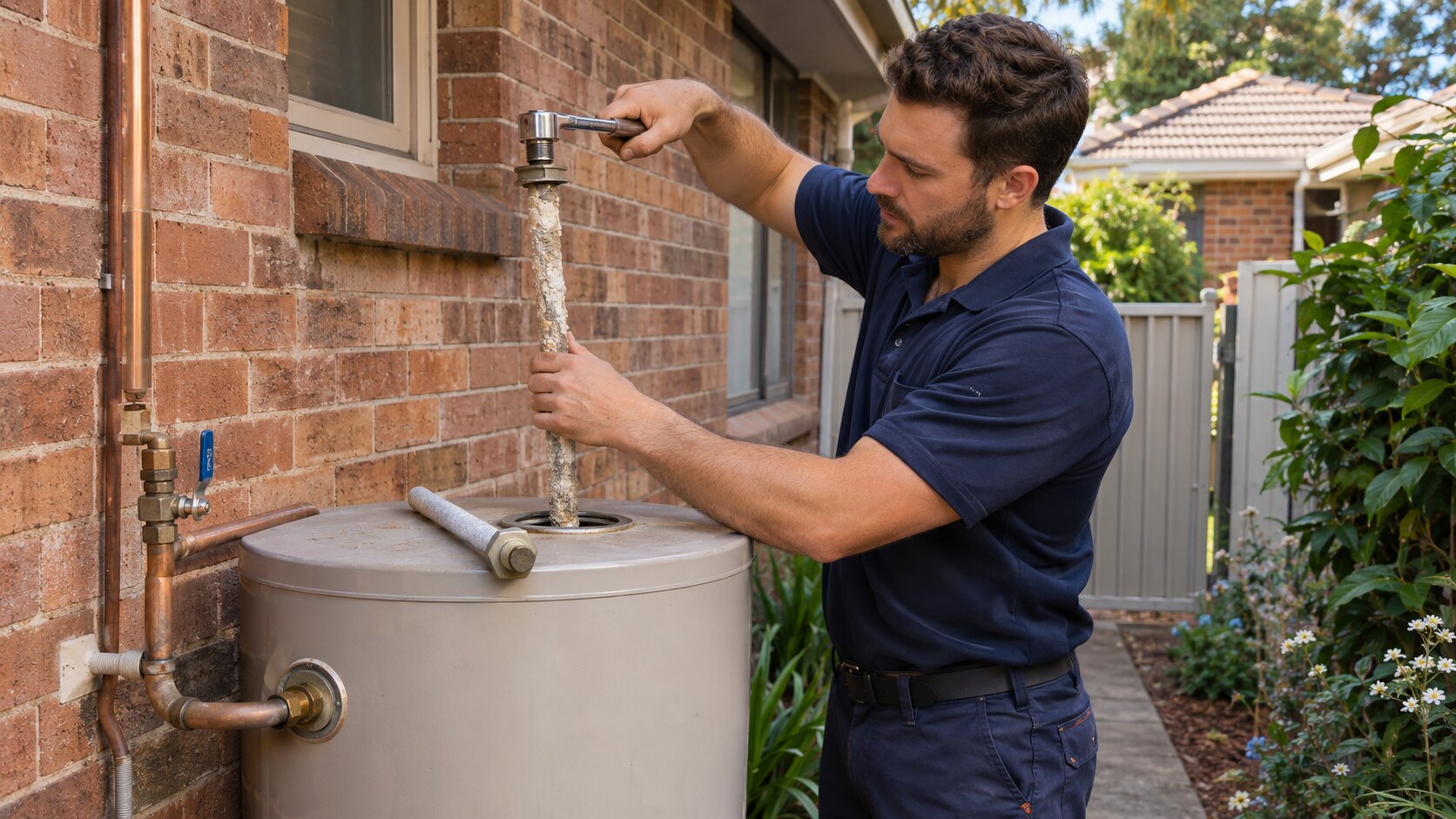
Usually a service — anode change and flush — not an emergency.
What's safe to check — and what isn't
A few checks are safe for anyone; the rest is a licensed gas or electrical job.
What's safe to check yourself
- Is the smell only on the hot tap (anode) or cold too (supply)?
- Run the hot tap — does discolouration clear or persist?
- Note any banging or rumbling to tell us
- How old is the system, and when was it last serviced?
Anode replacement and flushing are a licensed service job — don't open the tank yourself.
When to book a service
- Persistent rotten-egg smell on the hot tap
- Rusty or discoloured hot water that won't clear
- Banging, rumbling or kettling noises
- It's been years since the last service / anode check
These are service items — the sooner the anode and sediment are dealt with, the longer the tank lasts.
How a service fixes it
The licensed repair, and the fastest path back to hot water.
These are service jobs, not emergency repairs. We check and replace the sacrificial anode (sometimes with a different type to stop the smell), flush the sediment that causes noise and discolouration, and inspect the valves and element. Done in time, that's the difference between a long-lived tank and one that rusts out early. If the tank is already badly corroded, we'll tell you honestly.
Keeping ahead of this is exactly what regular servicing is for — our maintenance guide covers what you can watch for between services.
See also: book a service · the maintenance guide
Hot Water Smells & Noises: What's Normal and What's Not questions, answered
If yours isn't here, call — the line's attended 24 hours.
Why does my hot water smell like rotten eggs?
Why is my hot water rusty or discoloured?
Why is my hot water system banging or rumbling?
Is a smelly or noisy hot water system dangerous?
Can a service fix the smell and noise?
How often should this be serviced?
Tell us what's happening — we'll fix it
Call the 24-hour line with your suburb and the symptom, or request a quote. We prioritise no-hot-water call-outs and come prepared with the likely parts.