
Hot Water Maintenance Guide: Keep Your System Healthy
A little maintenance adds years to a hot water system and keeps running costs down. Here's what regular hot water system maintenance actually involves — the anode, the valves, flushing and temperature — and what's safe to do yourself versus what needs a professional.
Why maintenance matters
A hot water system is one of the hardest-working appliances in the house, and like any of them it lasts longer and runs better when it's looked after. Regular hot water system maintenance is the difference between a storage tank that reaches 12 years and one that fails at eight — and between a system that runs efficiently and one quietly wasting energy.
Most of the real maintenance is a professional job, because it involves draining a hot, pressurised tank and checking gas and pressure components. But there are a few safe things a homeowner can do, and knowing how to maintain a hot water system starts with knowing which is which.
See also: book a service
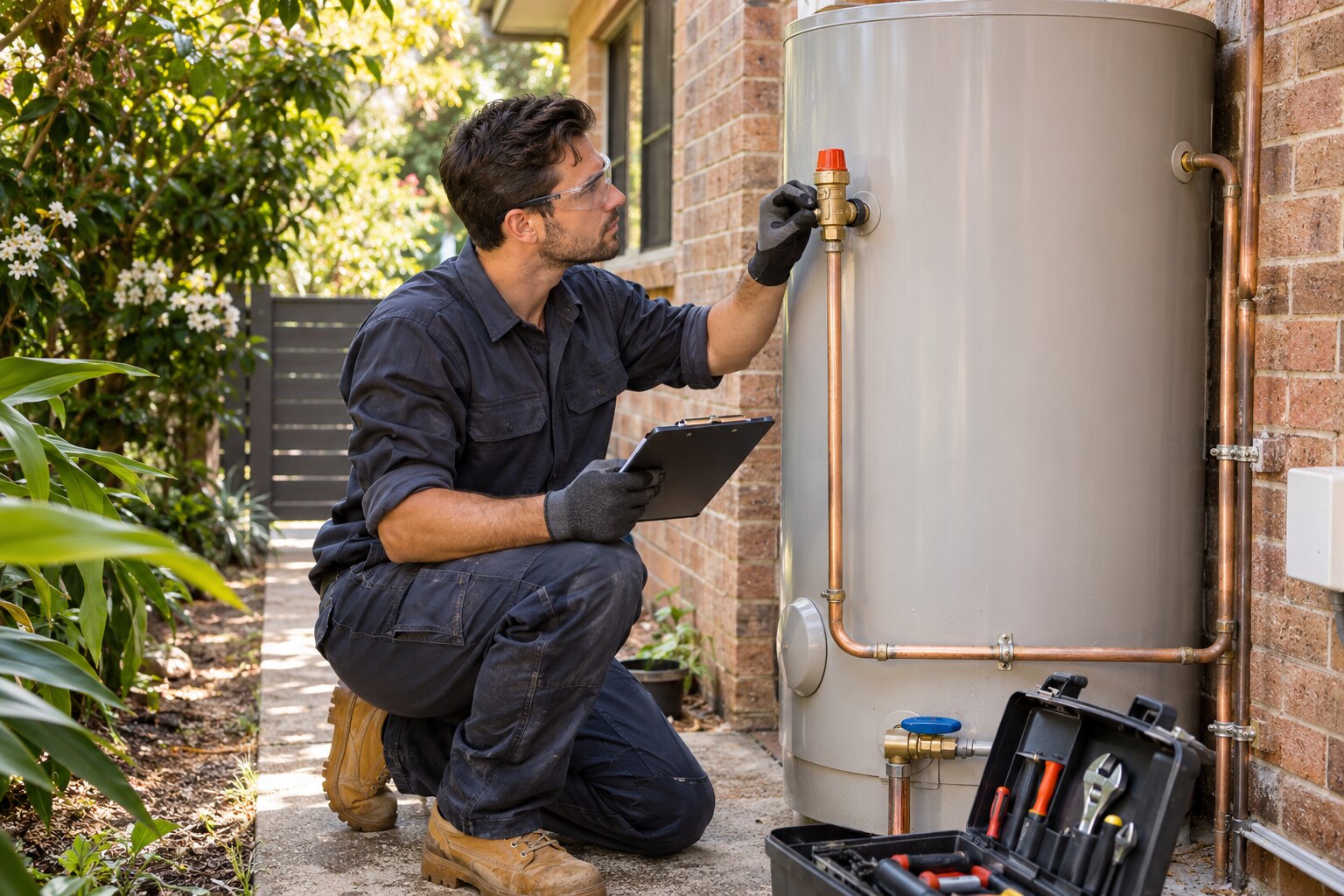
A simple maintenance schedule
Keep to this rhythm and your system will reach the top of its life.
The anode, flushing, valves and temperature
What each maintenance task does — and why the anode is the one that matters most.
Anode replacement
The sacrificial anode corrodes so your tank doesn't. Once it's spent (often around five years), the tank starts corroding instead. Replacing it on time can add years to a storage system — it's the highest-value maintenance there is, and a professional job.
Flushing & descaling
Sediment builds up in a storage tank over time, reducing efficiency and capacity. A periodic flush clears it. In hard-water areas this matters more, and it's done as part of a service.
Valves & temperature
The TPR and tempering valves are safety-critical and wear out — they're checked and replaced on a service. The thermostat should hold the tank at 60°C to kill bacteria, with the tempering valve delivering a safe 50°C at the taps.
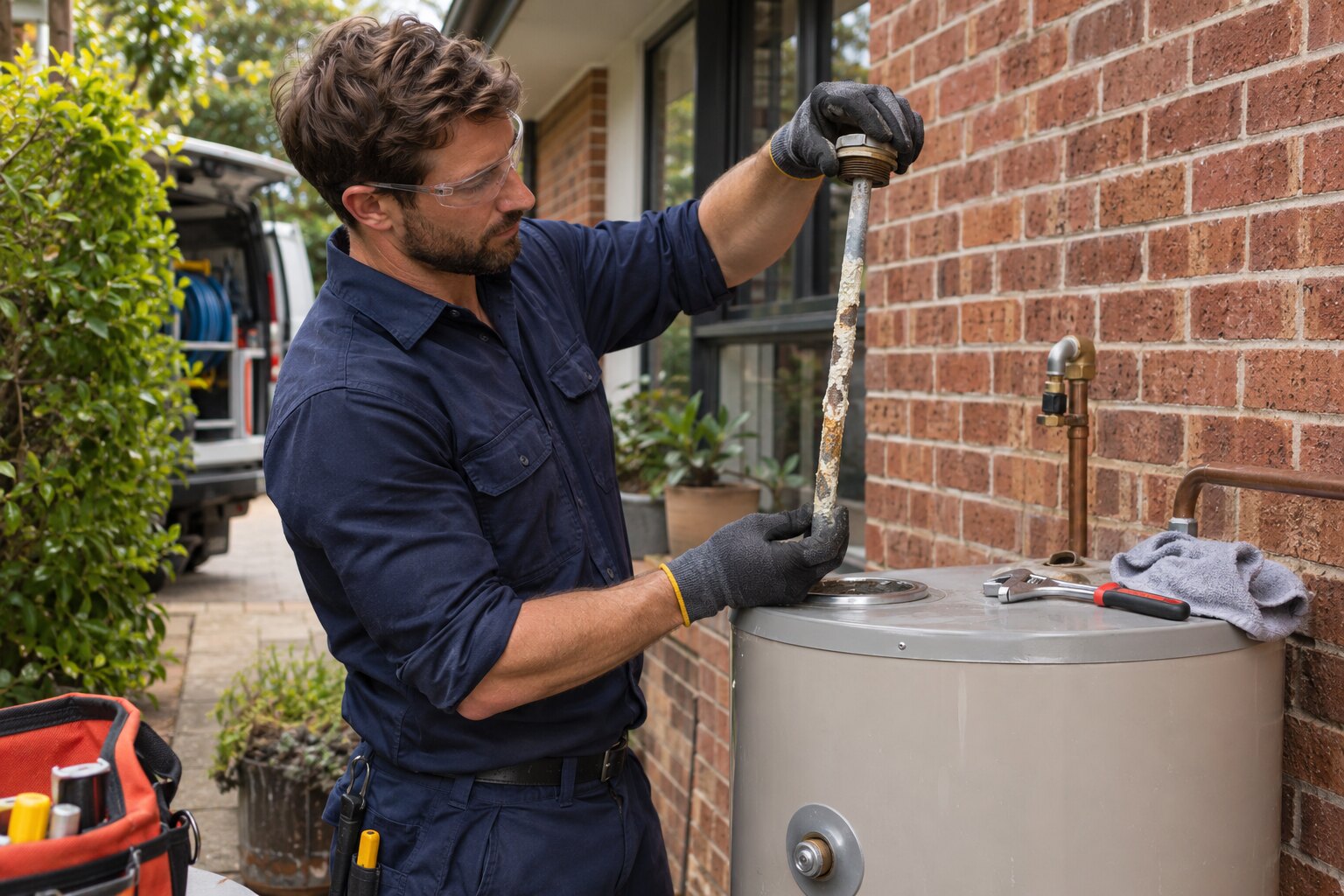
What you can do vs what needs a professional
Stay on the safe side — the homeowner tasks are genuinely safe; the rest needs a licensed pro.
Safe to do yourself
- Ease the TPR lever gently every six months.
- Keep the area around the unit clear and ventilated.
- Watch for leaks, rust, noise or a drop in hot water.
- Note changes in your energy bills.
Leave to a professional
- Anode inspection and replacement.
- Flushing or descaling the tank.
- Valve replacement and pressure checks.
- Any gas, electrical or temperature adjustment.
Put it on a service schedule
Two-to-three-yearly, with an anode check at five, does most of the work.
The simplest way to get the full life and efficiency out of a system is to put it on a regular service — every two to three years, and an anode check around five. A professional service covers everything on the pro list in one visit, catches small problems before they become failures, and keeps the safety components sound.
If it's been a while, book a service, and if you're wondering how much life your system has left, see how long systems last. A maintained system reaches the top of its range; a neglected one rarely does.
See also: book a service · how long do systems last
Hot water maintenance questions, answered
The questions we're asked most about maintenance.
How do I maintain a hot water system?
How often should the anode be replaced?
Should I flush my hot water system?
What maintenance can I do myself?
What temperature should my hot water system be set to?
How often should a hot water system be serviced?
Book a hot water service
We'll check the anode, valves, pressure and temperature, flush if needed, and keep your system running at its best. Sydney-wide, and we come to you.