
How Long Do Hot Water Systems Last?
A hot water system is a 10-to-20-year purchase — but which end of that range you land on depends on the type, your water, and whether it's ever serviced. Here's the honest lifespan by type, what shortens it, and how to spot the end coming.
Hot water system lifespan, in brief
Most hot water systems last somewhere between 8 and 20 years, and the type is the biggest factor. Storage tanks, which hold water against a steel or stainless cylinder, tend to sit at the shorter end; continuous flow units, with no tank to corrode, last the longest.
But the type only sets the range. Where your system actually lands depends on your water quality, your mains pressure, and whether the wear parts — the anode especially — are ever looked at. A serviced system routinely reaches the top of its range; a neglected one rarely does.
See also: servicing
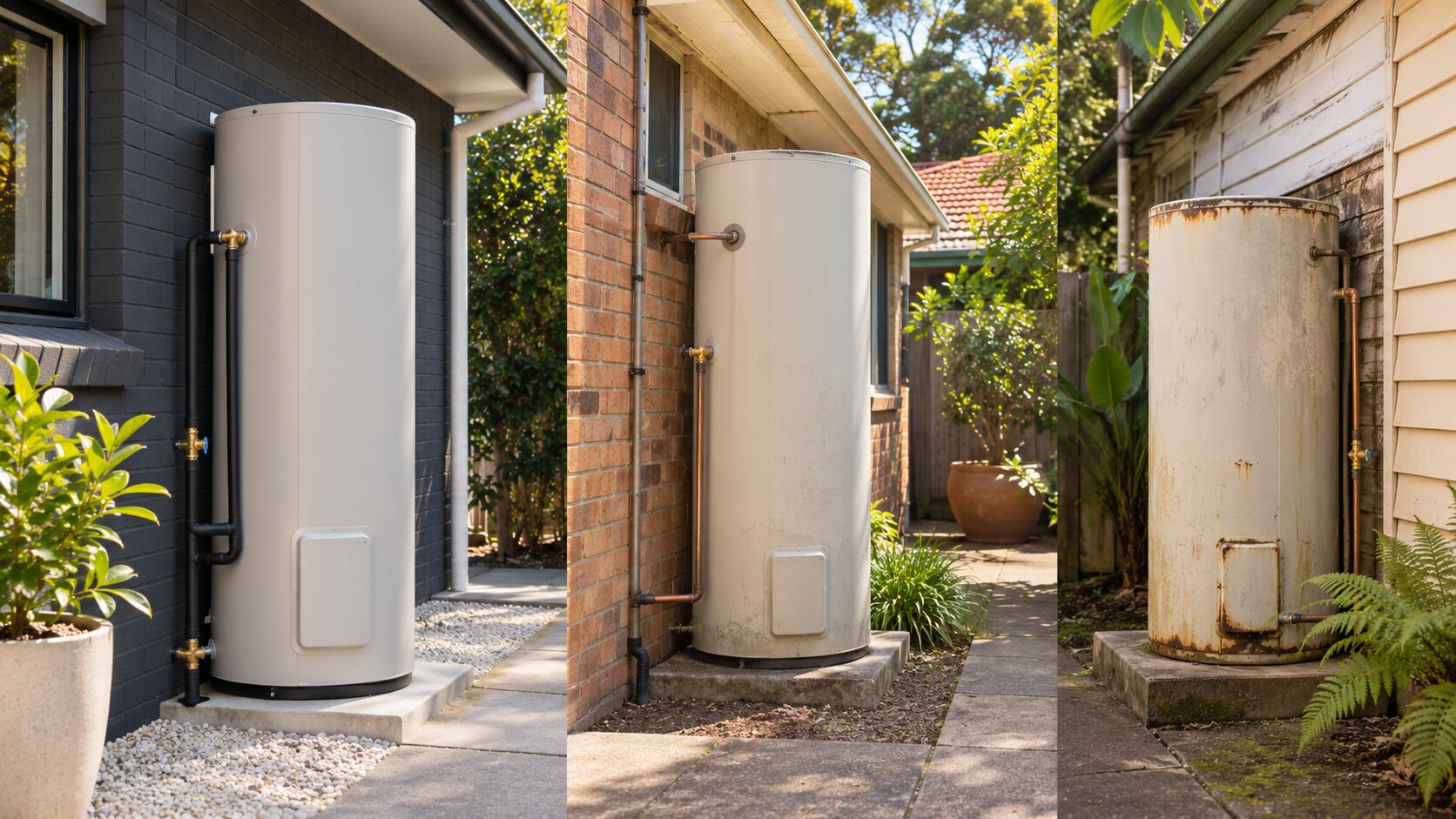
Average lifespan by system type
Typical Australian lifespans with regular care. Water quality and pressure move these up or down.
| System type | Average lifespan | Notes |
|---|---|---|
| Electric storage | 8–12 years | Anode replacement is what extends it |
| Gas storage | 10–12 years | Tank corrosion sets the limit |
| Gas continuous flow | 15–20 years | No tank to corrode — the longest-lived |
| Heat pump | 10–15 years | Compressor and fan are the wear parts |
| Solar | 15–20 years (collectors) | Tank 10–15 years; collectors longer |
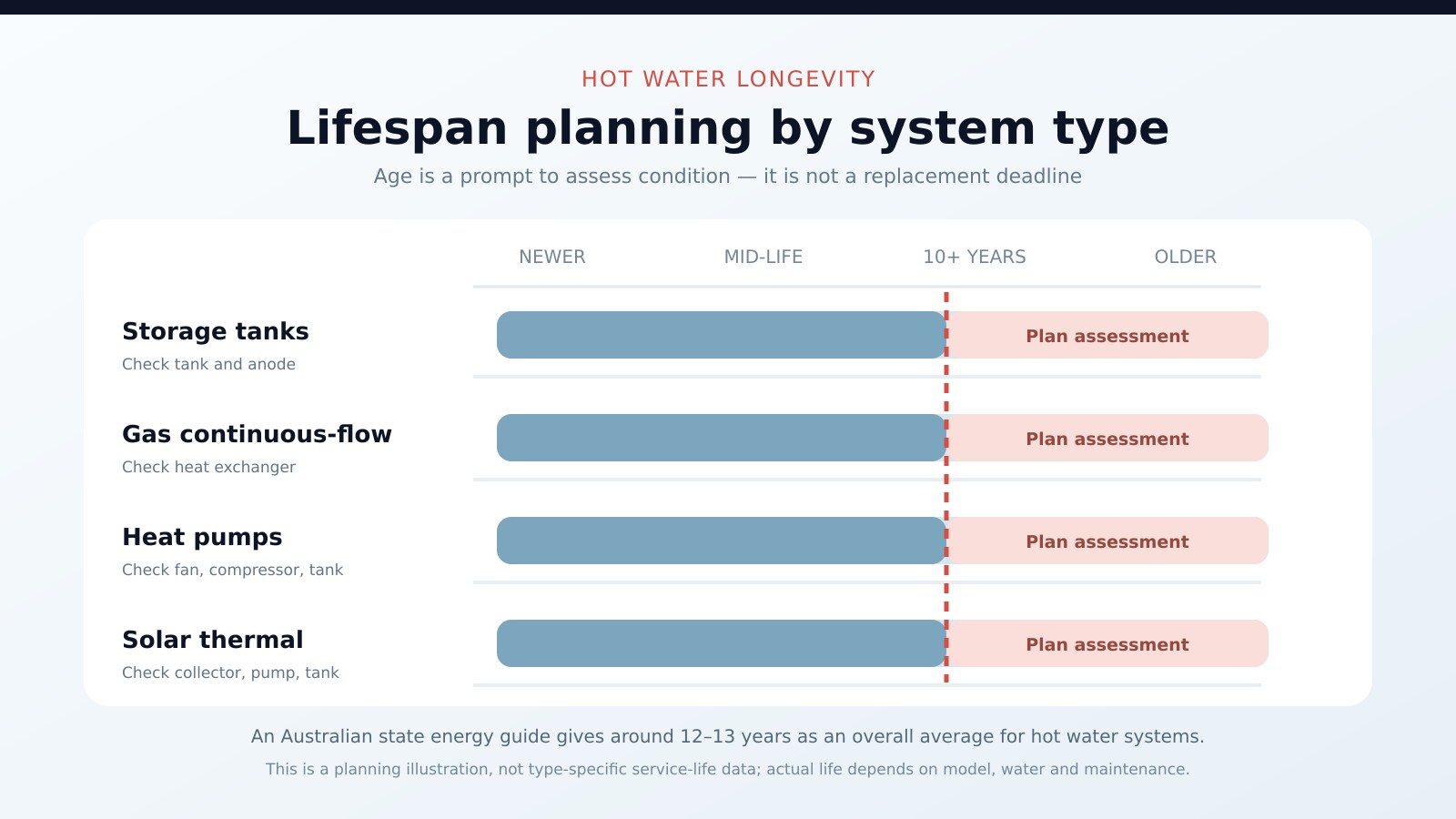
What shortens a hot water system's life
Two systems of the same type can last years apart — here's why.
Water quality
Hard or aggressive water corrodes a tank faster and chews through the sacrificial anode. In harder-water areas, a stainless tank or more frequent anode checks make a real difference.
The anode
A storage tank has a sacrificial anode that corrodes so the tank doesn't. Once it's spent — often around five years — the tank itself starts corroding. Replacing it on time is the single biggest lifespan extender.
Pressure & neglect
High mains pressure with no pressure limiting valve strains the tank and fittings, and a system that's never serviced quietly wears out early. Both are avoidable with a basic service schedule.
End-of-life signs to watch for
When these show up — especially on an older system — the end is near.
- Rusty, discoloured or metallic-tasting hot water
- Water pooling or leaking from the base of the tank
- Not as much hot water as it used to deliver
- Rising energy bills from a struggling system
- Repeat repairs in a short space of time
- Age past the top of its expected range
Reached the end? Repair or replace
Age tells you when; the 50% rule tells you whether.
If your system is showing its age, the next question is whether to nurse it along or replace it — and that depends on how far past its life it is and what a repair would cost. Our repair or replace guide walks through the 50% rule and the decision in full.
If it's clearly done, replacing an old electric or gas system with a rebated heat pump is often the cheapest system to own from here — see your replacement options. And whatever you've got, regular servicing is what gets the next one to the top of its range.
See also: repair or replace · replacement
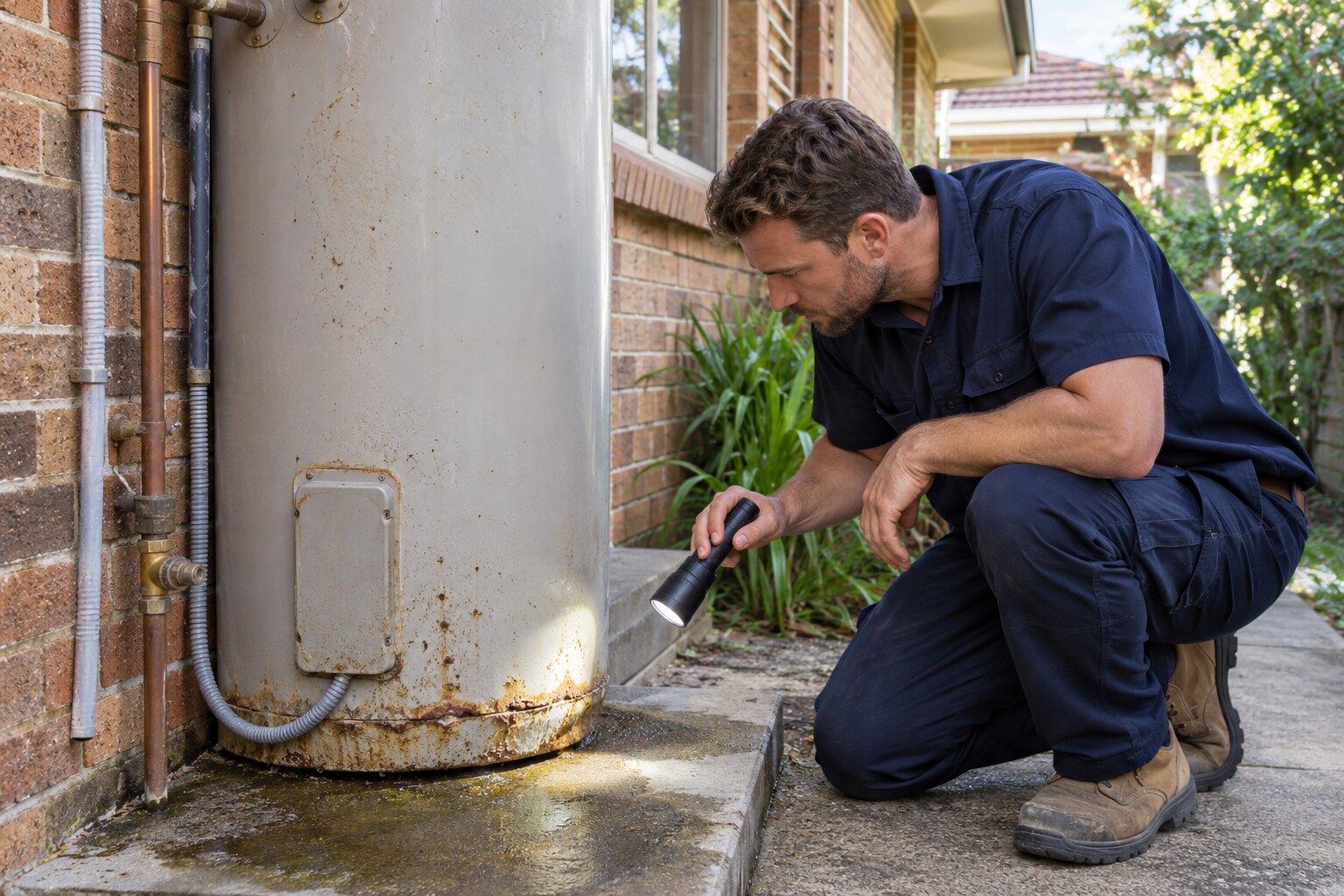
Hot water lifespan questions, answered
The questions we're asked most about lifespan.
How long do hot water systems last on average?
Which hot water system lasts the longest?
How long does an electric hot water system last?
What shortens a hot water system's lifespan?
How do I know my hot water system is near the end?
Can servicing really extend the life?
Get your system assessed
We'll check its age, condition and wear parts and tell you honestly how long it has left — and service it to get there. Sydney-wide, and we come to you.