
Tempering Valves Explained (and When You Need One)
A tempering valve is the small brass fitting that keeps the water at your taps at a safe temperature. Here's what it does, when the plumbing code makes it mandatory, how to tell it's failing, and what a replacement involves.
What a tempering valve actually does
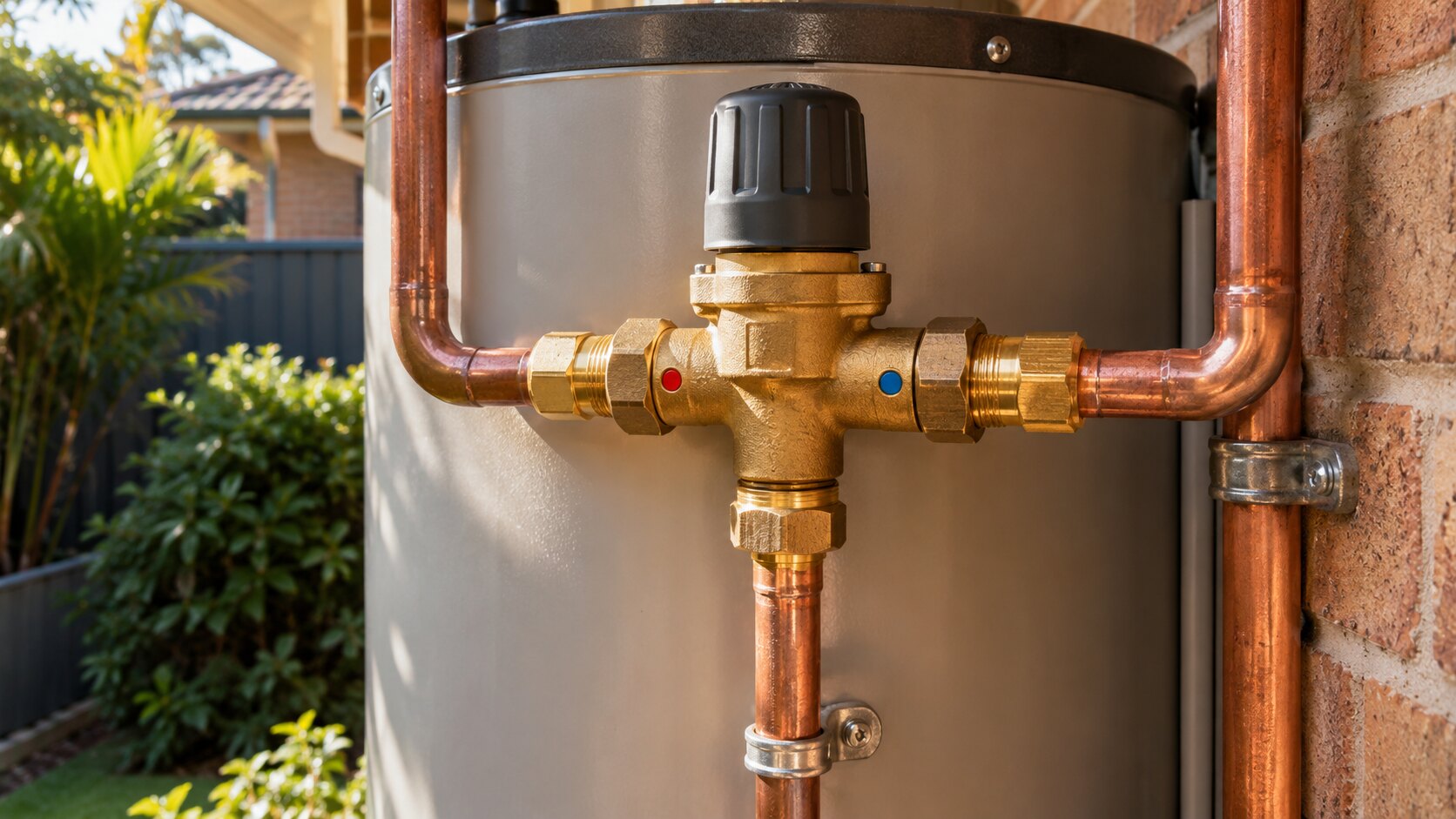
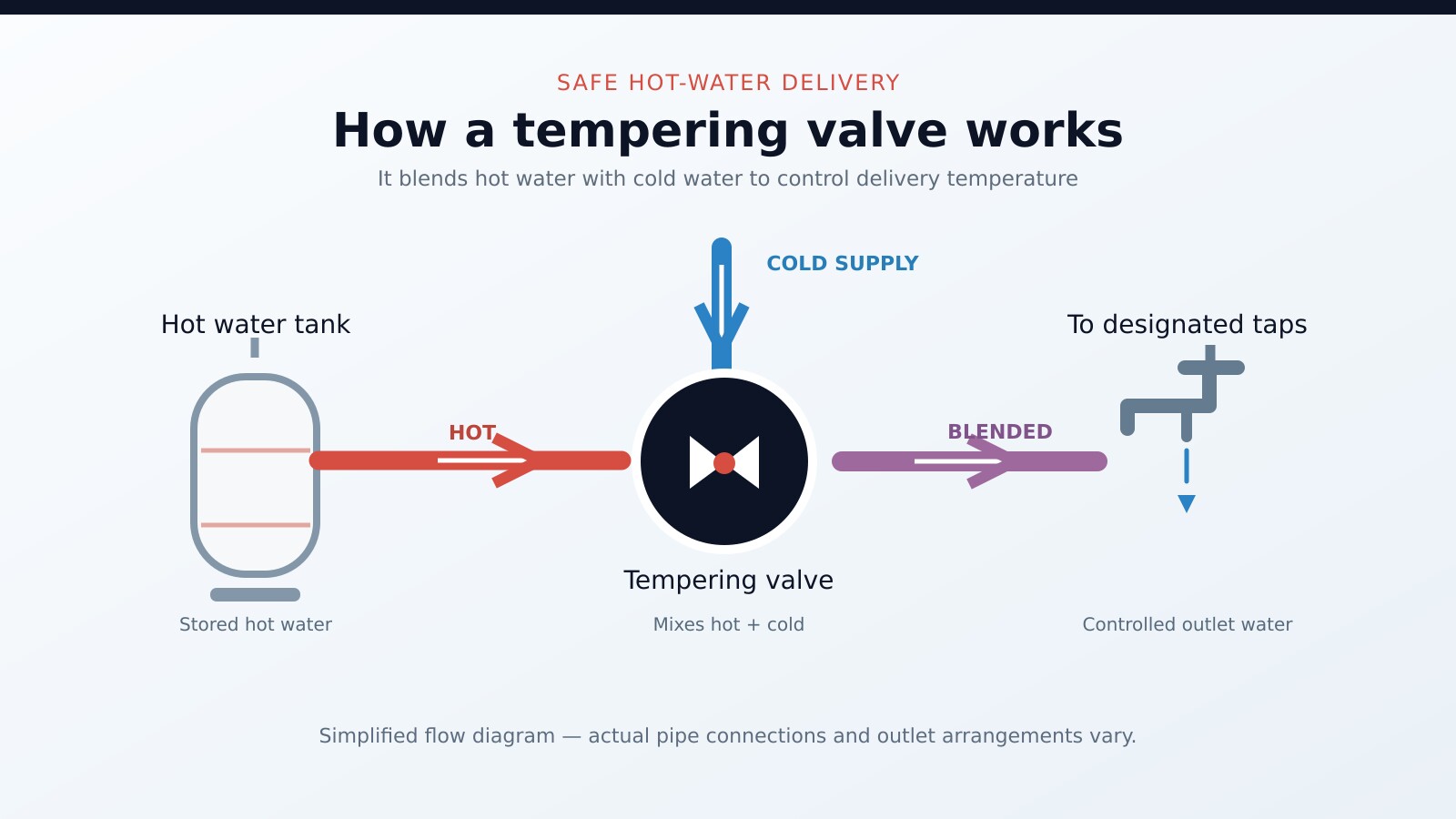
A tempering valve is a thermostatic blending valve fitted to the hot water outlet of your system. Your storage tank is deliberately kept hot — around 60°C — to kill Legionella bacteria. But water that hot will scald in under a second, so the tempering valve blends it with cold water to deliver a safe, steady temperature to your bathroom and bathroom-adjacent taps.
In plain terms: the tank stays hot for safety and hygiene, and the tempering valve makes sure what reaches your shower and basin can't burn anyone. It does this automatically, every time you turn on a hot tap, with no power and no settings for you to touch.
See also: professional installation
Scald protection, and the 50°C rule
Three things are happening at once — and they're why the valve is not optional on most homes.
Scald protection
Skin burns in about one second at 60°C, but takes around five minutes at 50°C. The tempering valve is the single device standing between a very hot tank and the people using the taps — children and older people most of all.
The 50°C delivery rule
Australia's plumbing code (AS/NZS 3500.4) requires hot water delivered to bathrooms, ensuites and other personal-hygiene outlets to be no hotter than 50°C. The limit drops to 45°C for places like childcare, aged care and healthcare. A tempering valve (or a thermostatic mixing valve) is how that limit is met.
Stored hot, delivered safe
The tank is held at 60°C or above to stop bacteria growing; the valve blends it down at the point it leaves the system. That's why you can't simply turn the thermostat down to 'fix' hot water that's too hot — you'd compromise safety at the tank.
Do I need a tempering valve?
This is the question most people actually have — so here's the straight answer.
For almost every Sydney home with a storage hot water system, the answer is yes. A tempering valve is required on new installations and on replacements — so whenever we install or replace a storage system, fitting a compliant tempering valve is part of a code-compliant job, not an optional add-on.
If you're wondering whether you need a tempering valve, the practical test is simple: do you have a storage hot water system and taps used for bathing or hand-washing? If so, the code requires temperature-limited delivery, and a tempering valve is the standard way to achieve it. Instantaneous (continuous-flow) units set their own delivery temperature electronically and are handled differently.
Because the valve is a compliance item, its cost is usually bundled into an installation. We explain exactly where it sits in a quote in our guide to what's included and the extras on an install.
See also: install costs & extras
When a tempering valve goes wrong
A tempering valve has moving parts and a service life of around five years. When it starts to fail it usually shows up at the taps in one of two ways.
Water suddenly too hot
- The valve is sticking open on the hot side and no longer blending in enough cold.
- Delivery temperatures can climb back toward tank temperature — this is the dangerous failure.
- Switch to cold at the tap and treat it as urgent until it's checked.
Water that's not hot enough
- The valve is stuck toward cold, or has failed closed, so you get lukewarm water even though the tank is hot.
- If your hot water has gone weak or tepid, a failing tempering valve is one of the first things we check.
Replacing a tempering valve — and what it costs
The honest version: the part is inexpensive, the right install is what matters.
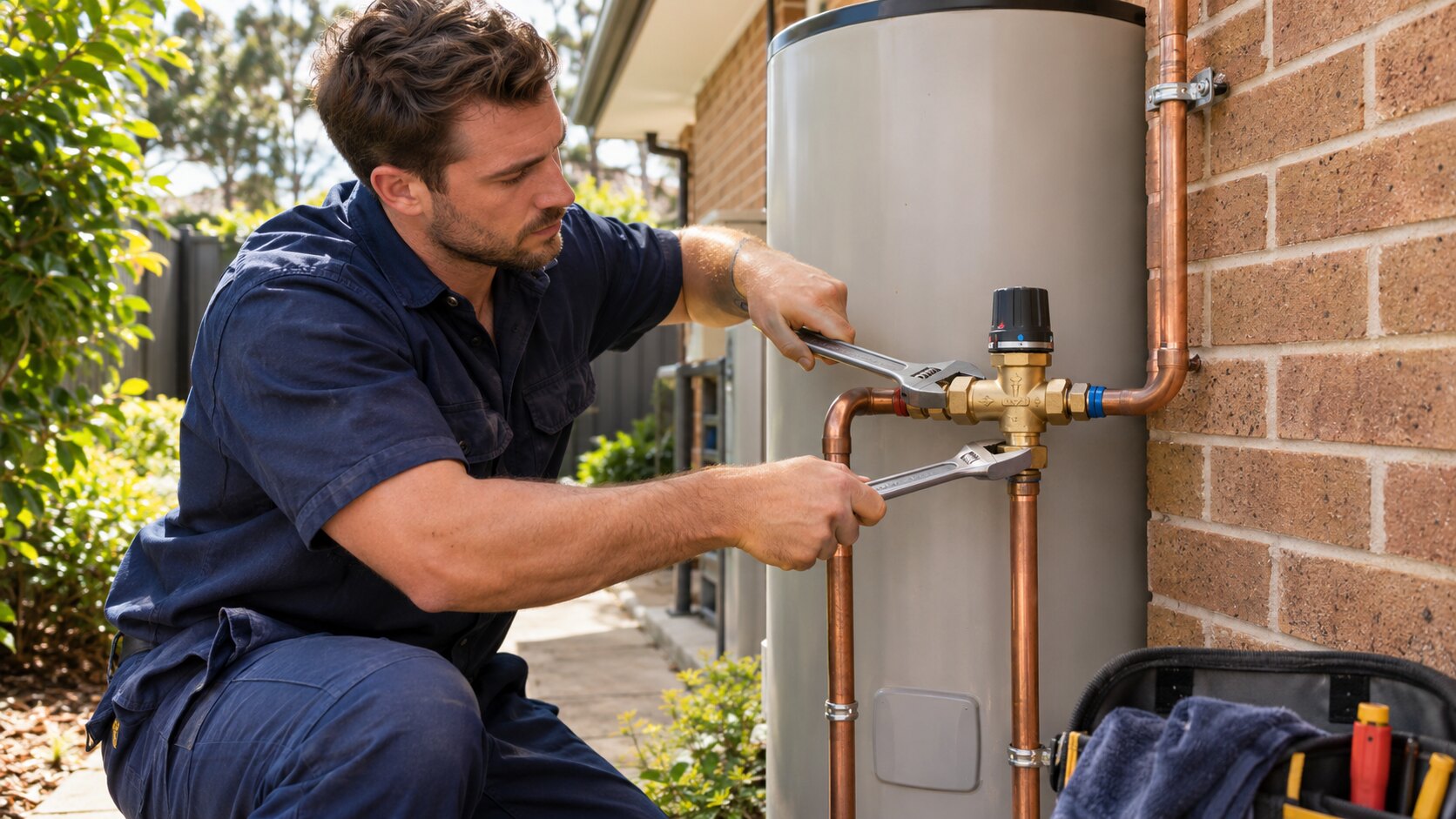
Replacing a tempering valve is a licensed plumber's job. It sits on the pressurised hot outlet, it has to be the correct temperature rating for the outlets it serves, and it must be installed to the code — so this is not a DIY part, and adjusting or bypassing one yourself can leave water dangerously hot.
What drives the tempering valve replacement cost is mostly access and what else is found at the same time: how the existing valve is plumbed, whether isolating valves are present, and whether the fitting has corroded onto old pipework. Rather than quote a number that won't match your situation, we give you an exact price after a quick look — and if we're already on site for a service or repair, replacing a failed valve is a fast job.
The valve should be checked whenever your system is serviced, and replaced at the first sign it's not holding a safe, steady temperature.
See also: water that's not hot enough
Tempering valve questions, answered
The questions we're asked most about tempering valves.
What is a tempering valve?
What does a tempering valve do day to day?
Do I need a tempering valve?
How do I know my tempering valve is failing?
Can I adjust or replace a tempering valve myself?
How often should a tempering valve be replaced?
What does a tempering valve replacement cost?
Talk to Sydney's hot water specialists
Whether your water's gone too hot, too cold, or you just want your system checked for compliance, we'll sort it — licensed, Sydney-wide, and we come to you.