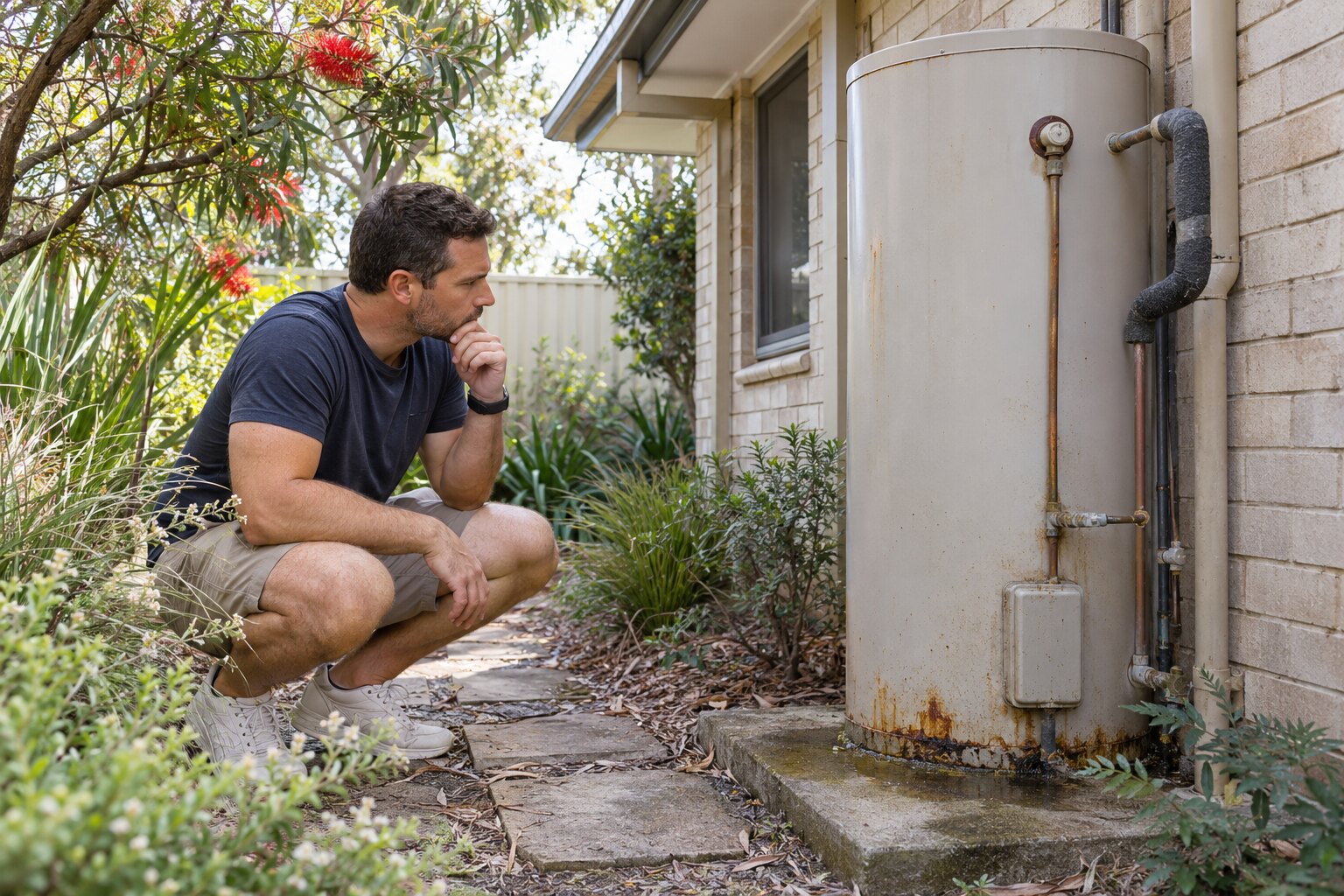
Hot Water Safety Checks: Gas, Pressure & Scald Risks
A hot water system is pressurised, often gas-fired, and delivers water hot enough to scald — so a few safety basics genuinely matter. Here's a plain hot water system safety check: what's safe to look at yourself, what the warning signs are, and when to call a licensed pro.
The three real safety risks
Most of the time a hot water system just works, quietly, for years. But three risks are worth understanding, because the warning signs are easy to miss until they're serious: gas (and carbon monoxide), pressure, and scalding.
None of this is about doing repairs yourself — the opposite. The point of a hot water system safety check is knowing the signs, doing the few safe checks a homeowner can, and knowing exactly when to stop and call a licensed professional.
See also: servicing
Gas & carbon monoxide, pressure, and scalding
What each risk looks like, and why it matters.
Gas & carbon monoxide
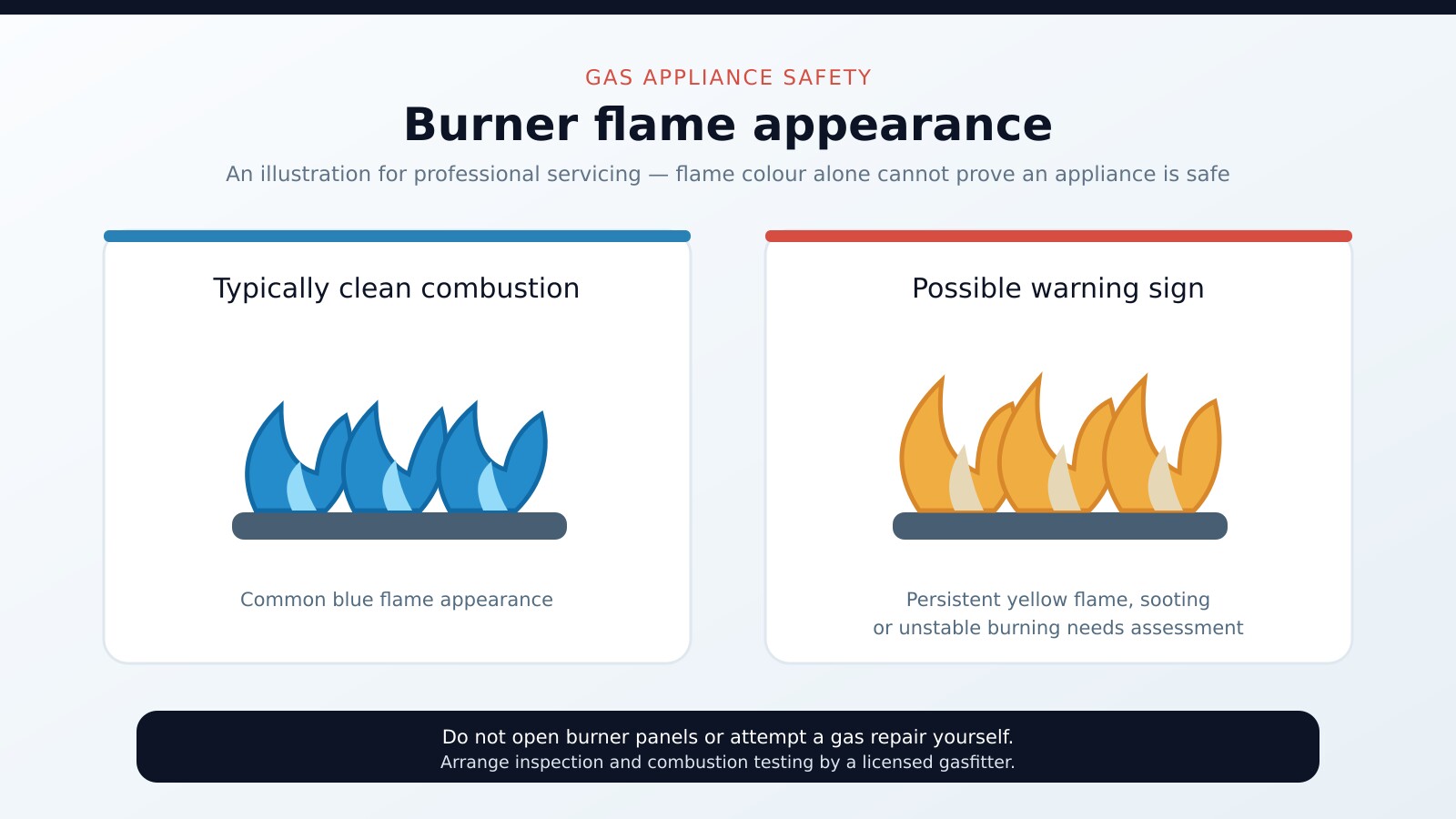
A gas system should burn with a clean blue flame. A yellow or sooty flame, black marks around the unit, or symptoms like headaches, nausea or dizziness when it's running can signal carbon monoxide — which is colourless and odourless. This is a stop-and-call-a-professional situation.
Pressure & relief valves
The TPR (temperature-pressure relief) valve protects the tank. A little discharge while heating is normal; constant streaming means a fault or excess pressure. Banging pipes or a relief valve running non-stop points to a pressure problem that needs a licensed plumber.
Scald protection
Water is stored hot enough to scald, so a tempering valve blends it down to a safe maximum of 50°C at your bathroom taps. If your hot water suddenly runs dangerously hot, the tempering valve may have failed — treat it as urgent.
What you can check vs when to call a pro
Stay on the safe side of this line — the checks on the left are fine; anything on the right is a licensed job.
Safe for a homeowner
- Look for a clean blue gas flame vs yellow/sooty.
- Note whether the relief valve drips constantly or just while heating.
- Check hot tap temperature isn't dangerously hot.
- Keep the area around the unit clear and ventilated.
Stop and call a licensed pro
- Any gas smell, yellow flame, soot, or CO symptoms.
- A relief valve streaming constantly, or banging pipes.
- Water running dangerously hot at the taps.
- Any actual repair, valve replacement or gas work.
If you smell gas — what to do
A gas smell is an emergency. Do this, in order, and don't improvise.
When to call a licensed professional
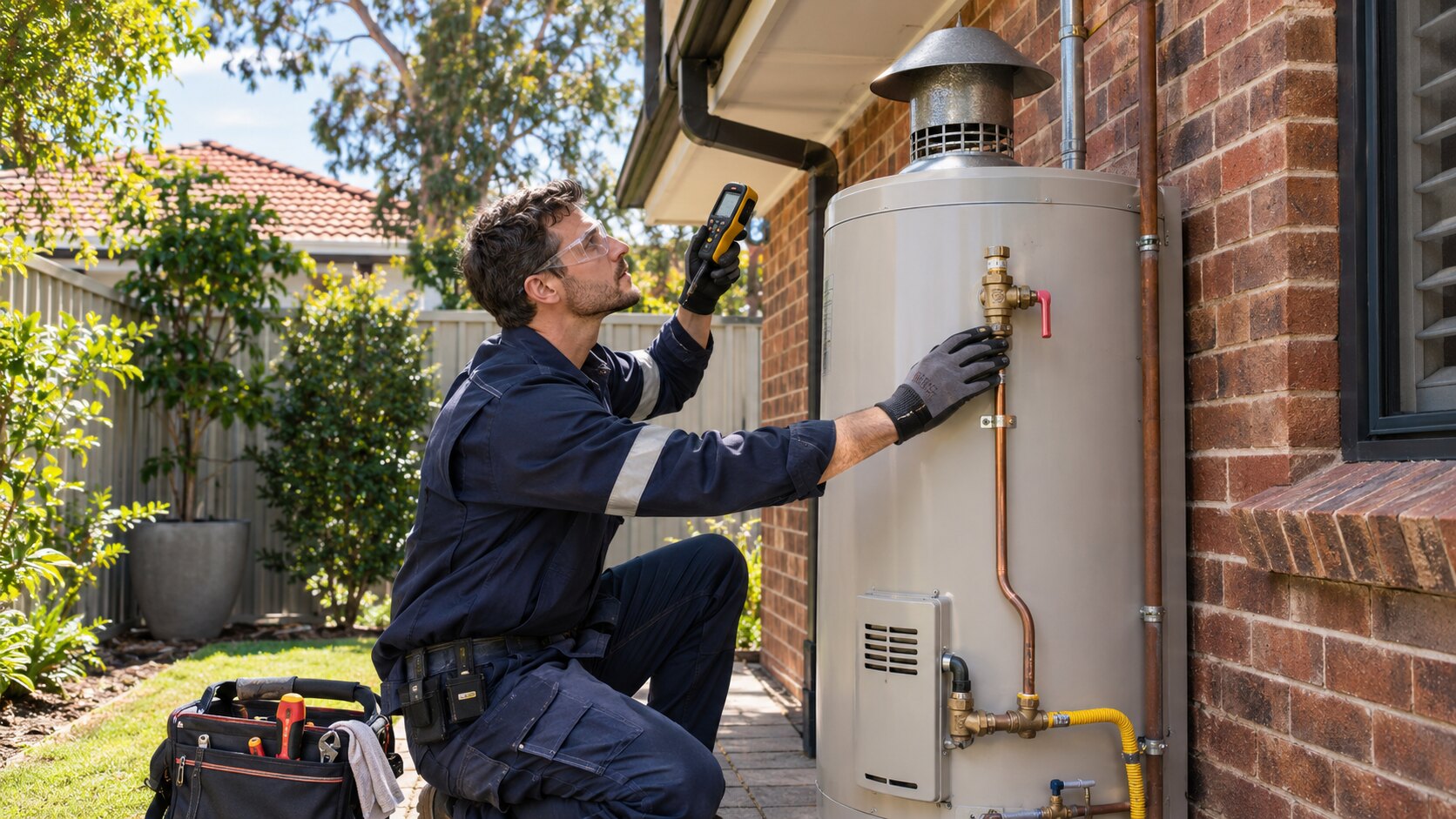
Look and notice freely; leave touching and fixing to a licensed pro.
The rule of thumb is simple: looking and noticing is fine; touching, adjusting or repairing a gas, pressure or hot water component is a licensed job. Gas work in particular is licensed for good reason — carbon monoxide and gas leaks are genuinely dangerous, and a DIY attempt can make a safe situation unsafe.
If any of the warning signs above are present, book a repair with a licensed plumber or gasfitter, and keep your system on a regular service so the safety components — the TPR valve, the tempering valve, the burner — are checked before they become a problem.
See also: book a repair
Hot water safety questions, answered
The questions we're asked most about hot water safety.
How do I know if my hot water system is safe?
Can a gas hot water system cause carbon monoxide?
What should I do if I smell gas?
Why is my hot water suddenly scalding hot?
Is it normal for the relief valve to drip?
What hot water safety checks can I do myself?
Book a safety check
We'll inspect the gas, pressure and scald-protection components and put anything unsafe right — licensed, Sydney-wide, and we come to you.