
Pressure Limiting Valves Explained
A pressure limiting valve is the quiet protector of your whole hot water system. Here's what a PLV does, why your system needs one, how to tell it's failing, and when it should be replaced.
What a pressure limiting valve does
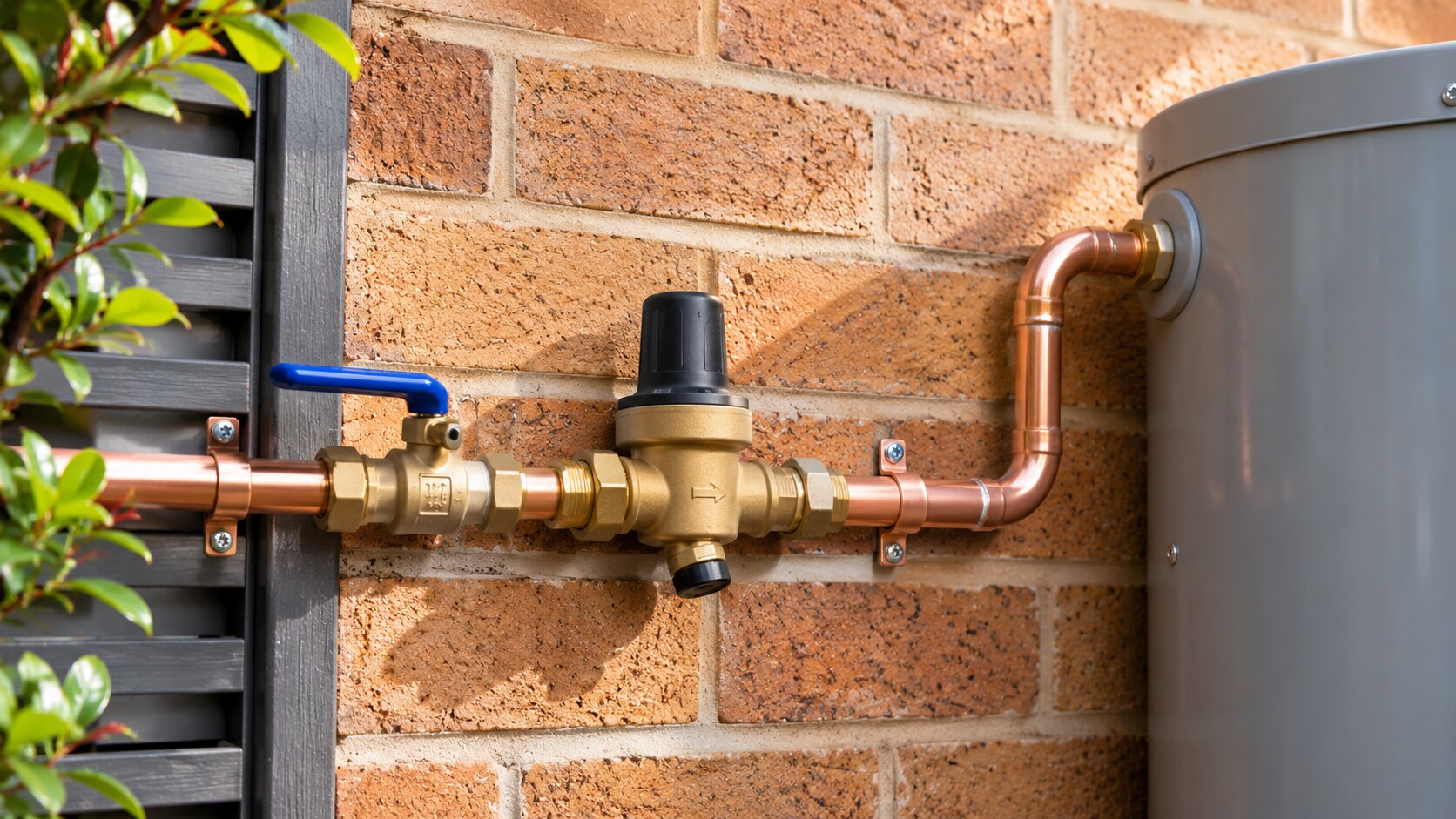
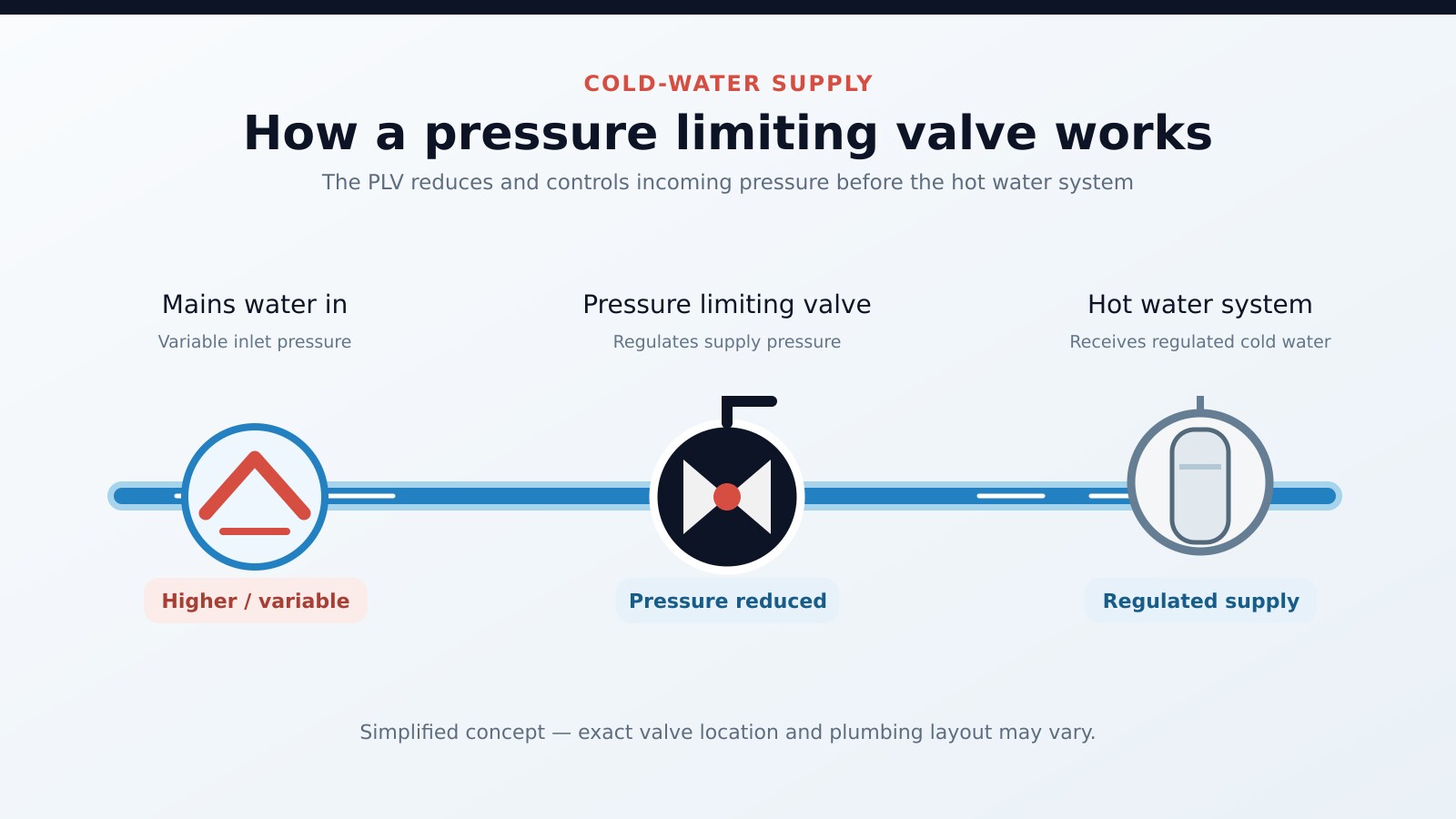
A pressure limiting valve — often shortened to PLV, and closely related to a pressure reducing valve — sits on the water supply to your hot water system and caps the pressure flowing into it. Mains pressure in parts of Sydney can run higher than a hot water system is designed to take, and a PLV holds it to a safe, steady level.
Think of it as a governor on the incoming water. Without it, high or spiking mains pressure is passed straight into the tank, the fittings and every valve on the system — shortening their life and pushing water out of the relief valve. The PLV keeps everything downstream working within the pressure it was built for.
See also: professional installation
Why a hot water system needs one
A PLV does one job extremely well — and it protects some expensive things while doing it.
Protects the tank & valves
Every component on a storage system — the cylinder, the tempering valve, the relief valve, the joints — has a pressure rating. The PLV keeps incoming pressure below those ratings so nothing is working under strain it wasn't designed for.
Stops nuisance relief discharge
When mains pressure is too high, the temperature-pressure relief valve drips or streams water to protect the tank. Fitting the correct pressure limiting valve is often what stops that constant discharge.
Sets the right pressure
Hot water systems are commonly matched to a set pressure rating. The PLV is rated to hold the supply at that level — so the valve has to be the right rating for the system, which is why it's chosen and fitted by a licensed plumber.
When a PLV stops doing its job
A pressure limiting valve wears out over time. When it fails you'll usually notice it as a pressure problem at the taps, or as water escaping from the relief valve.
Pressure too high
- A failed-open PLV lets full mains pressure through.
- You may see banging pipes, dripping from the relief valve, or fittings starting to weep.
- It's quietly shortening the life of the whole system.
Low pressure at the taps
- A PLV that has failed the other way, or clogged, chokes the supply — so hot water flow drops off.
- If your flow has weakened, a tired PLV is one cause worth checking alongside the system itself.
Replacing a PLV, and getting the rating right
The part is small; choosing the right rating is the whole job.
A PLV replacement is licensed plumbing work. The critical part isn't the swap itself — it's selecting a valve with the correct pressure rating for your system and your mains supply. Fit one that's rated too high and it won't protect anything; too low and you'll starve the taps.
Because a PLV protects the tempering valve, the relief valve and the tank, replacing a failed one promptly is one of the cheapest ways to extend the life of an expensive system. We check it whenever we service a system, and replace it as part of a new installation so the whole setup is matched from day one.
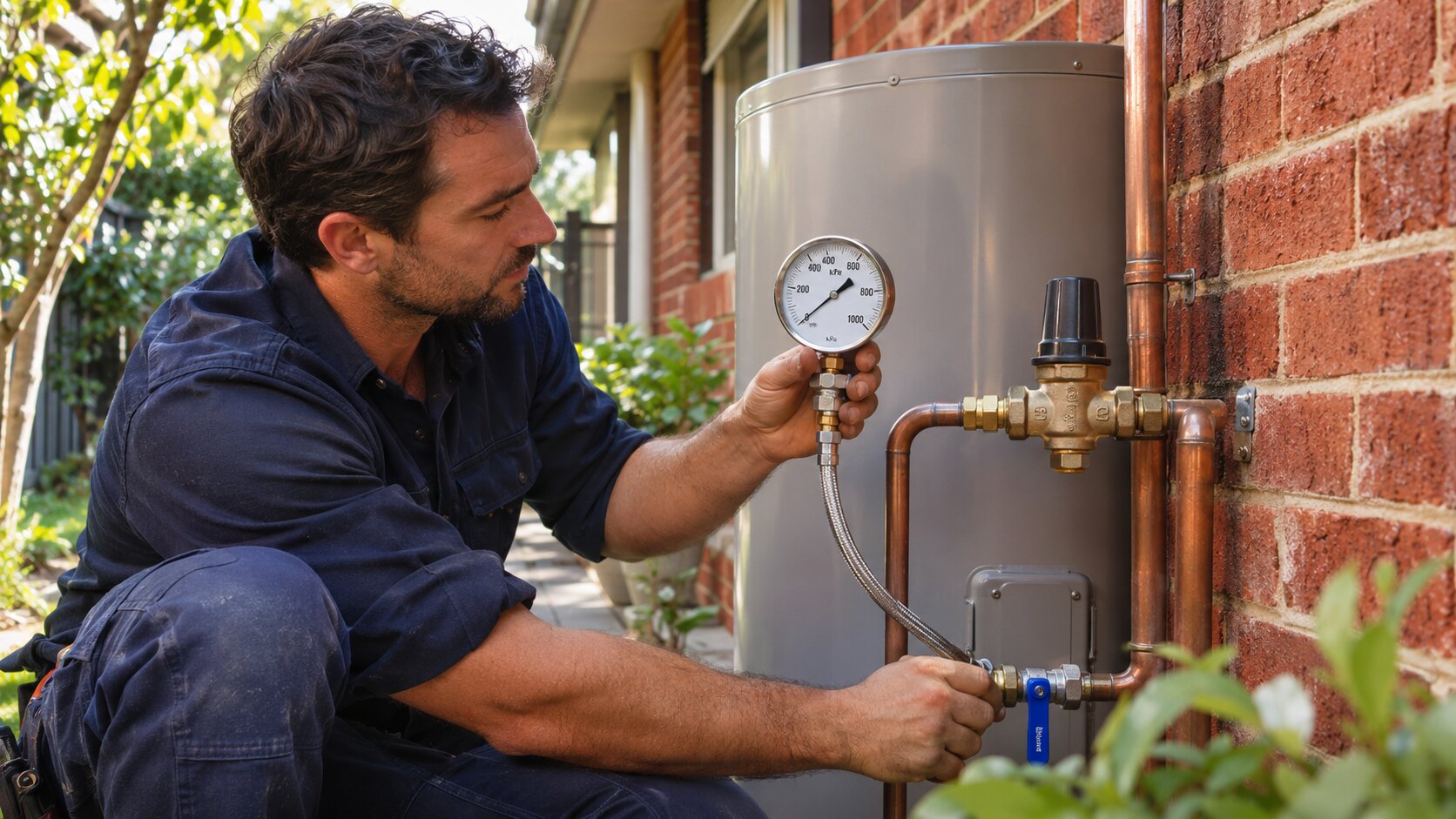
If you've noticed weak flow, banging pipes or constant dripping from the relief valve, have the pressure checked — it's a quick diagnosis and an inexpensive fix compared with the damage high pressure does over time.
See also: low pressure
Pressure limiting valve questions, answered
The questions we're asked most about pressure limiting valves.
What is a pressure limiting valve?
How does a pressure limiting valve work?
Is a pressure limiting valve the same as a pressure reducing valve?
Why does my hot water system need a PLV?
What are the signs a PLV is failing?
Can I replace a PLV myself?
Get your hot water system's pressure checked
Banging pipes, a dripping relief valve or weak flow all point to pressure. We'll check it and fit the right valve — licensed, Sydney-wide, and we come to you.