
TPR Valve Explained (Temperature & Pressure Relief)
The TPR valve is the most important safety device on your storage hot water system — and the one most likely to be leaking. Here's what it does, why it discharges water, when that's normal, and when to be concerned.
What the TPR valve does
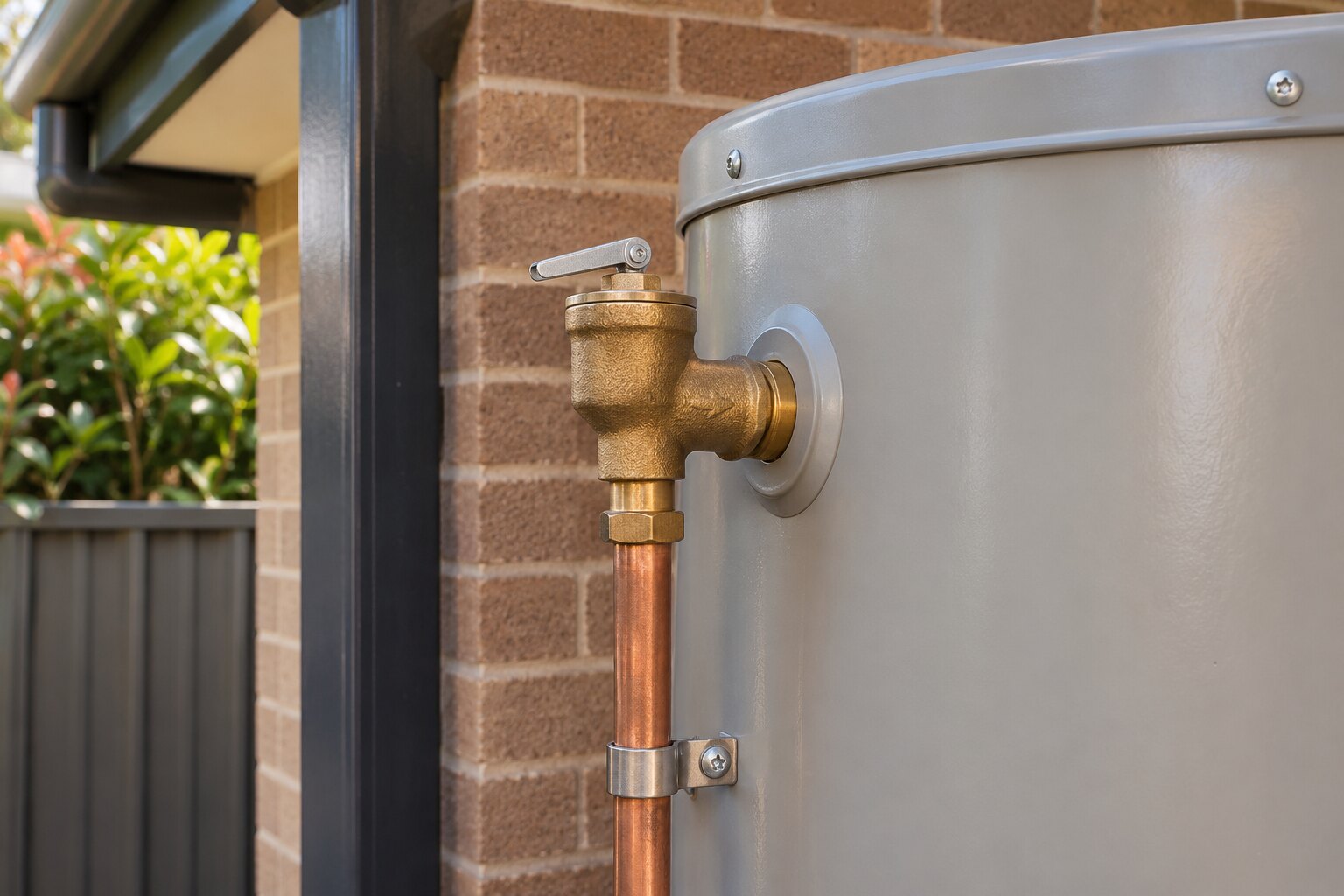
The TPR valve — the temperature pressure relief valve — is the safety valve screwed into the side or top of a storage hot water tank. Its job is to release water if the temperature or the pressure inside the tank climbs too high, stopping the tank from becoming dangerous. Every storage system has one, and it's not optional.
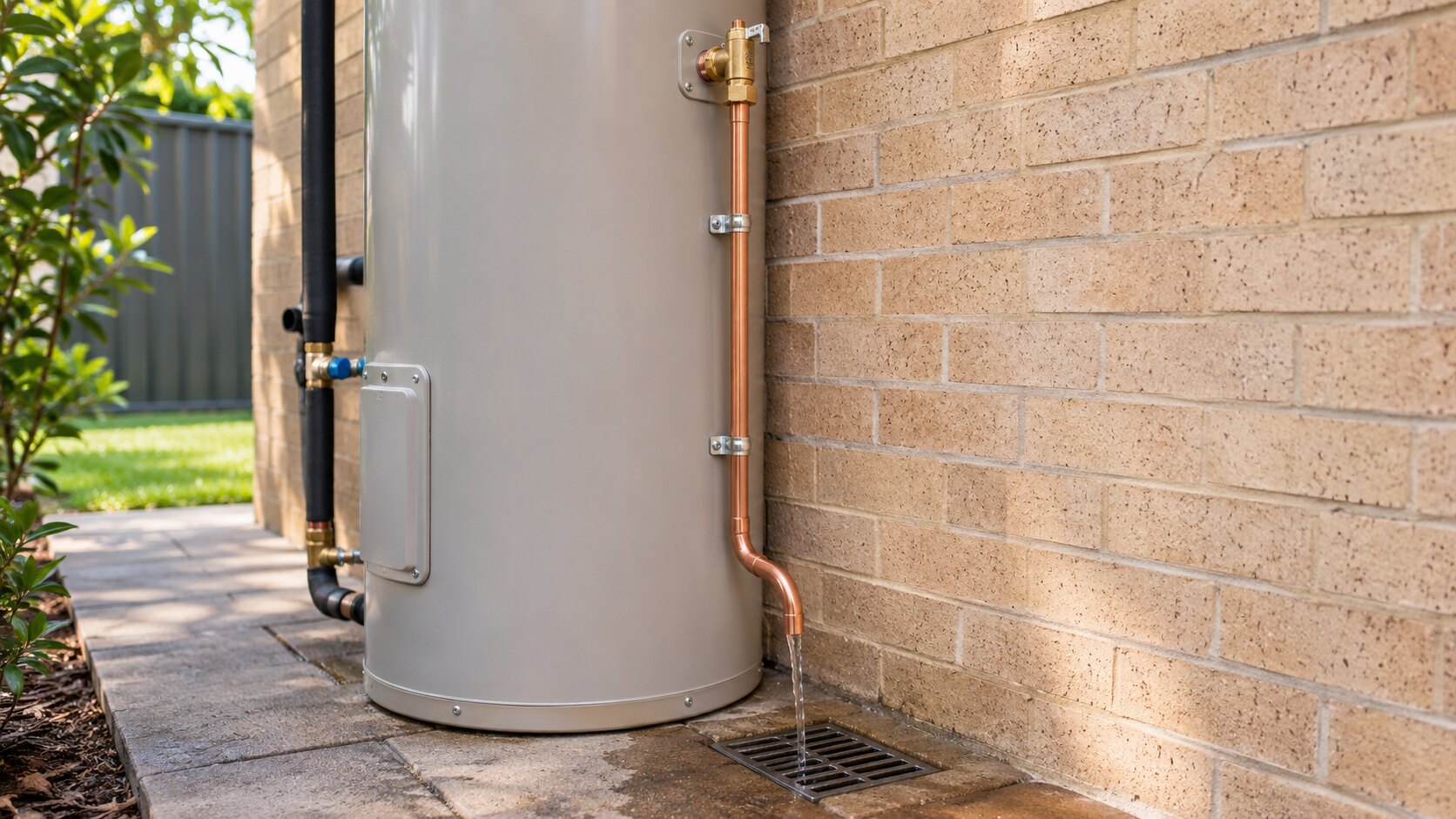
You'll usually see it as a brass fitting with a small lever on top and a copper drain line running down to the ground. That drain line is how the valve does its job: when it needs to relieve pressure, it pushes a little hot water out through that pipe rather than letting pressure build inside the tank.
See also: book a repair
Why it discharges water
Some discharge is the valve working exactly as designed. The trick is knowing normal from a fault.
Temperature & pressure relief
Water expands as it heats. As the tank heats a cycle, pressure rises, and the TPR valve lets a small amount of water out to relieve it. This is a safety release — it's protecting you from a tank that could otherwise over-pressurise.
A little, during heating, is normal
It's normal to see some water from the drain line while the system is heating — typically a cupful to a few cups over a heating cycle. A slow occasional drip during the hot part of the day is usually the valve doing its job.
Constant or heavy flow is a fault
A valve that streams water continuously, or discharges large amounts, is a fault — either the valve itself has worn and no longer seals, or the system pressure is too high and needs a pressure limiting valve. Either way it should be checked.
Is my TPR valve discharge normal?
Use this to judge what you're seeing before you call — and when in doubt, have it checked.
Normal
- A small amount of water from the drain line while the system heats.
- An occasional drip in the hottest part of the day.
- The line otherwise dry — the valve is relieving pressure as designed.
A fault
- Water running constantly, a steady stream, or pooling at the drain.
- The valve weeping cold, or no discharge at all with a valve that won't move when eased.
- These point to a worn valve or a pressure problem.
Easing, testing and replacing a TPR valve
The honest version: ease it twice a year, and treat constant discharge as a job to book.
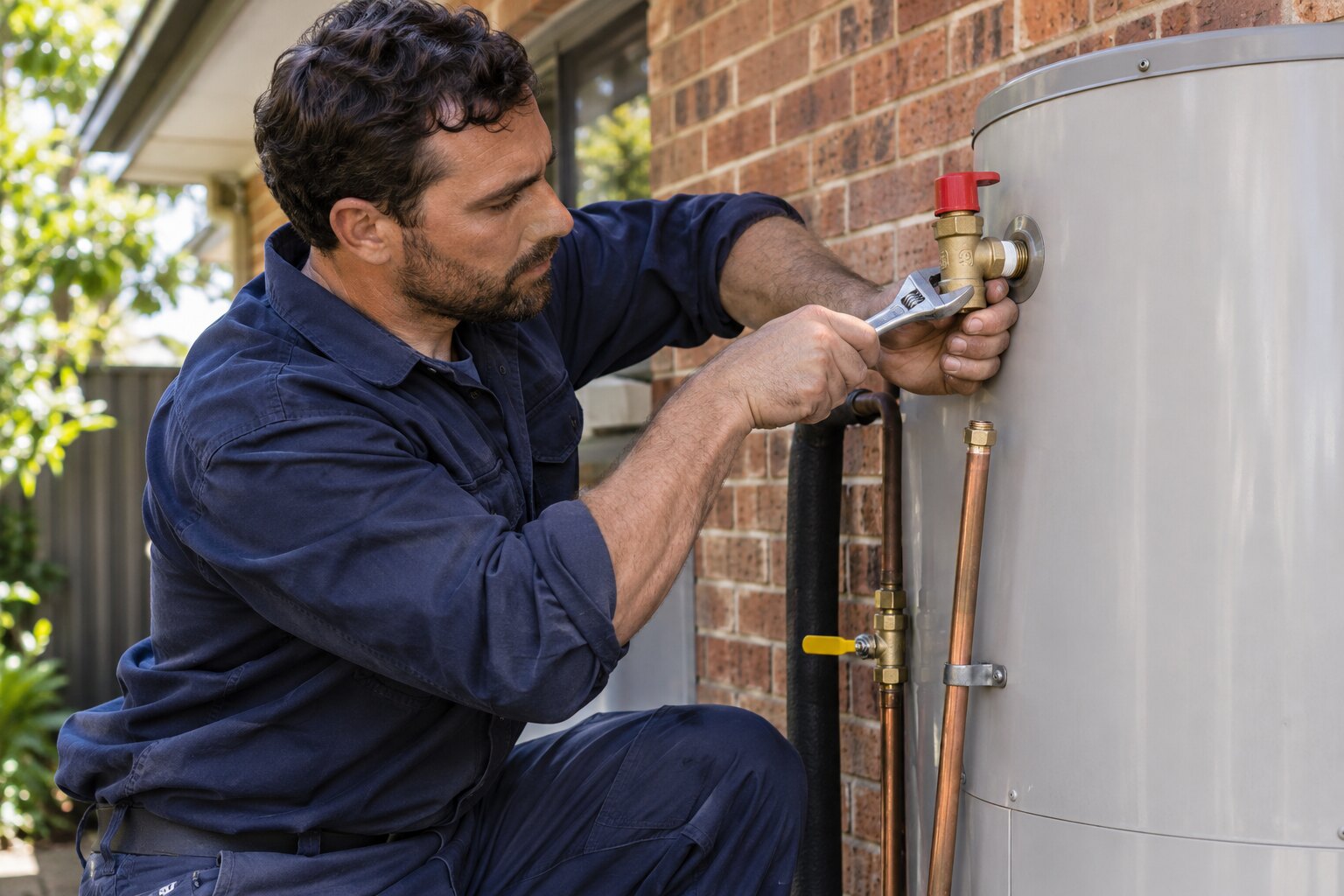
A TPR valve is a wear item. The lever should be gently eased every six months to flush grit off the seat, and the valve should be replaced roughly every five years — or sooner if it's leaking, discharging constantly, or seized. A valve that's been dripping for a while often won't reseal once it's disturbed, which is why a licensed plumber replaces rather than just re-seats a tired one.
Replacing a TPR valve is licensed work on a hot, pressurised tank — not a DIY job. If yours is leaking or discharging and you're not sure whether it's the valve or the system pressure, that's exactly the diagnosis we make on site: we'll confirm the cause, replace the valve if it's worn, and fit a pressure limiting valve if high pressure is the real problem.
See also: leaking / discharging
TPR valve questions, answered
The questions we're asked most about TPR valves.
What is a TPR valve?
Why is my TPR valve leaking?
Is it normal for a TPR valve to discharge water?
How often should a TPR valve be replaced?
Can I replace a TPR valve myself?
What happens if a TPR valve fails?
Get it checked before it wastes water — or worse
Constant discharge is either a worn valve or a pressure problem, and both are quick for us to diagnose. Call Sydney's hot water specialists — licensed, and we come to you.