

Blog
What Size Hot Water System Do You Need? A Practical Household Sizing Guide for Sydney Homes

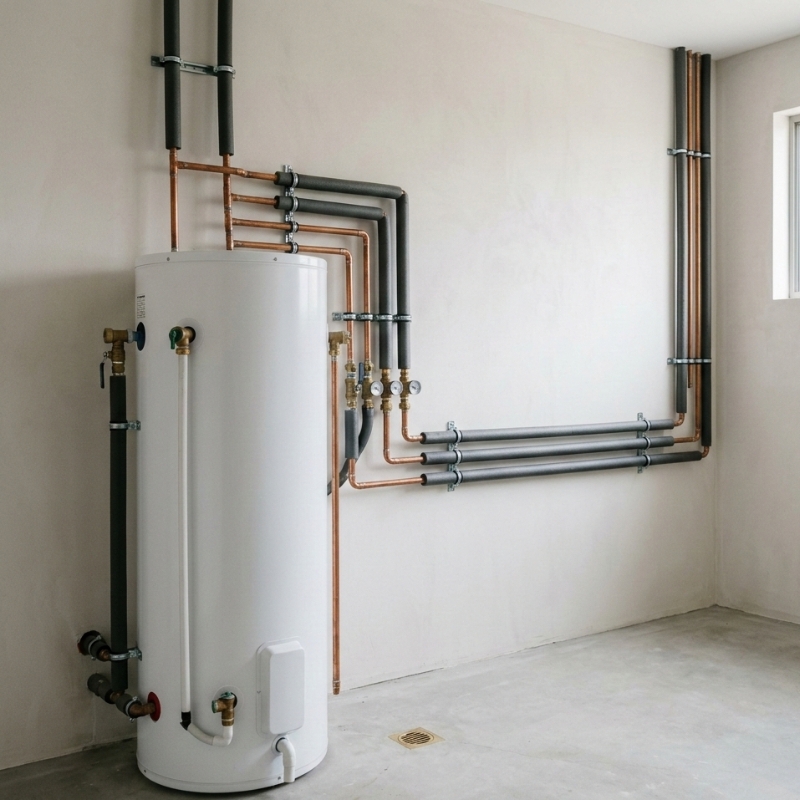
Choosing the right electric hot water system size is one of those decisions you only notice when it’s wrong. Too small and you’re rationing showers or running out halfway through the morning rush. Too big and you can end up paying more than you need to keep a large volume of water hot that your household rarely uses.
This guide gives you a practical way to size a hot water system for a Sydney household using real-life inputs:
• how many people live in the home
• how many bathrooms you actually use
• when your busiest hot water “peak” happens
• shower flow rate and shower habits
• appliance use that stacks onto peak demand
• how system type changes the sizing outcome
It’s also written to connect logically with electric options (because many Sydney households consider electric), while staying educational and focused on household fit.
Start with what really determines comfort: peak demand
Most homes don’t use hot water evenly across the day. The real test is whether your system can keep up during your busiest 60–90 minutes, which for many Sydney households is:
• early morning (showers plus kitchen use)
• early evening (showers plus cooking, dishes, laundry)
Sizing is most accurate when you design around that peak window rather than the daily average.
Why tank litres don’t automatically equal “more showers”
A tank’s litre capacity is not the same as “usable shower time” because:
• hot water mixes with cold water at the tap
• your shower flow rate (L/min) changes everything
• stored temperature and delivered temperature can differ (tempering)
• recovery time determines whether the system can bounce back between uses
That’s why two homes with the same tank size can have totally different experiences.
Q&A: How do I know if the problem is sizing or something else?
If you consistently run out of hot water after back-to-back showers at the same time each day, that’s often a sizing or recovery mismatch. If you’re seeing temperature swings, long waits, or lukewarm water even with light use, it can also be:
• thermostat issues
• sediment build-up in a storage tank
• a failing element (common in ageing electric storage systems)
• a tempering valve problem
• pressure/flow constraints
Even if you suspect a fault, doing the sizing exercise first helps you avoid replacing a system with another one that doesn’t match your household.
Step 1: Map your household’s hot water pattern in 10 minutes
Open a note on your phone and answer these honestly (not your “ideal” routine):
• How many showers happen between 6:00 and 9:00 am on weekdays?
• Do you ever have two showers at once?
• Are showers back-to-back or spaced out?
• Do you run the dishwasher or washing machine during the morning peak?
• How many bathrooms are used on a typical weekday?
• Are showers short and efficient, or long and slow?
• Any teenagers or high-usage habits (sports training, multiple showers per day)?
Your peak pattern is the foundation for sizing. If you skip this step, you’re guessing.
Sydney note: winter can make a borderline system feel “smaller”
In winter, incoming water is colder, and most people want hotter showers. That can mean:
• the system has to do more work to reach comfortable shower temperature
• your “usable” hot water seems to disappear faster
• borderline sizing becomes obvious (often in July/August)
If you’re only just coping in summer, that’s a clue you may be undersized or under-recovering.
Step 2: Measure your shower flow rate (this is the hidden game-changer)
Two households with the same number of people can need different system sizes purely due to shower flow.
A quick DIY method:
• put a bucket under the shower
• time 10 seconds
• measure the litres collected
• multiply by 6 to get litres per minute (L/min)
Example:
• 1.5 litres in 10 seconds = 9 L/min
• 2.5 litres in 10 seconds = 15 L/min
Why this matters:
• 9 L/min for 8 minutes ≈ , 72 litres of mixed water
• 15 L/min for 8 minutes ≈ , 120 litres of mixed water
That’s nearly double the demand for the same “one shower”.
Q&A: What’s a normal shower flow rate?
It varies by showerhead, plumbing, and household pressure. Many efficient setups sit around 7–9 L/min. Some older or “rain” style heads can be much higher. If you discover you’re running a high-flow shower, you’ve got two levers:
• size the system to match it, or
• reduce flow (often cheaper than upsizing)
Step 3: Pick the scenario that matches your home (and your habits)
Rather than relying on generic charts, use a scenario that reflects how your household actually behaves.
Scenario A: 1–2 people, 1 bathroom (apartment or small home)
Often works with a smaller capacity if:
• showers aren’t long and high-flow
• peaks are not stacked (e.g., dishwasher + laundry + two showers at once)
Watch-outs:
• two long showers back-to-back at high flow can feel like a “mystery problem” when it’s simply peak demand
Scenario B: 3–4 people, 1 bathroom (family home)
This is a classic morning-peak household:
• multiple showers in a row
• kitchen use at the same time
• occasional laundry or dishwasher stacking onto the peak
Comfort here depends on both:
• capacity, and
• recovery timing
Scenario C: 4 people, 2 bathrooms (or frequent simultaneous use)
Two bathrooms changes the equation because it increases the chance of:
• two showers at once
• shower + kitchen + laundry overlap
• guests adding extra peak demand
If simultaneous showers are common, you generally size for peak flow capability as well as stored volume.
Scenario D: 5+ people or high-use households (teens, long showers, sport training)
High-use households often need:
• extra buffer capacity, and/or
• a system type that better suits your peak (continuous supply within limits, or faster recovery)
If your home has “stacked peaks” (morning plus afternoon plus evening), you’ll want a system that can recover between those waves.
Step 4: Understand capacity versus recovery (the part most people miss)
You can have a reasonably sized tank and still run out if the recovery doesn’t match your peaks. Conversely, a moderate tank can feel great if it recovers at the right pace and your peak demand is realistic.
Common reasons a system “feels small”:
• your household peak is too concentrated (everyone showers at 7:30 am)
• The system can’t recover quickly enough between uses
• reheating timing doesn’t match your schedule
• the system is ageing or partially failing (elements, thermostat, sediment)
Where electric options fit into sizing
Many Sydney homes consider electric because it’s straightforward to compare, and capacities are easy to understand. For electric storage systems, comfort depends on:
• tank litres (buffer)
• how quickly it can reheat (recovery)
• whether your household peak hits before the system has had a chance to recover
If you’re still narrowing down what capacities exist (and what “right-sized” looks like in the real world), it can help to scan the typical options by size range first: browse electric hot water options
Q&A: Is it safer to go bigger “just in case”?
Not always. Oversizing can mean:
• paying to keep more water hot than you use
• higher standing heat losses for storage tanks
• taking up extra space (a real issue in many Sydney homes)
A better approach is sizing for peak demand with a small, sensible buffer based on your likely future changes.
Step 5: Avoid the “two bathroom trap”
A common Sydney pattern looks like this:
• The home has two bathrooms
• Day-to-day, only one is used
• Then lifestyle changes, and suddenly, both bathrooms are active
Triggers include:
• teenagers using the ensuite
• shift work routines
• guests staying over
• renovations changing the flow of the house
If you suspect you’re moving toward more two-bathroom use, it’s smart to size with that future peak in mind.
Practical rule:
• If you rarely have simultaneous showers, focus on capacity + recovery
• If you regularly have simultaneous showers, plan for higher peak demand (and don’t assume litres alone will fix it)
Step 6: Include appliances and lifestyle that add “surprise demand”
Sizing charts often assume showers only. Real homes don’t.
These factors can push you into the next size band:
• dishwashers that use hot water (some are cold-fill only, so check)
• washing machines using hot cycles (many households default to cold now)
• spa bath (large, sudden draw)
• home business or higher-than-average washing needs
• multiple daily showers (gym, sport training, shift work)
Step 7: Use a simple “peak hour plan” to finalise your size
Fill this out for your household. It’s simple, but it’s the difference between guessing and choosing well.
Your peak hour plan
• Showers in the busiest hour: ___
• Any simultaneous showers? yes/no
• Shower flow rate (approx): ___ L/min
• Other hot water during that hour (kitchen/laundry/dishwasher): low/medium/high
• Winter comfort priority? yes/no
• Likely household changes in 1–3 years? yes/no
If you can answer those, you can confidently choose a size band and system type.
A sensible “buffer” rule
If you’re torn between two sizes, base the decision on:
• whether simultaneous showers are likely to increase
• whether showers are high-flow or long
• how often you host guests
• whether winter is when you notice problems most
If none of those applies, the smaller option often delivers the best efficiency-to-comfort balance.
Choosing between system types without getting overwhelmed
You don’t need to memorise specs. Match the system type to your usage pattern.
Storage systems
Often suit:
• predictable peaks
• households that prefer a familiar approach
• homes with space for a tank
Sizing focus:
• litres (buffer) plus recovery suitability
Instantaneous systems
Often suit:
• households that dislike “running out” due to stored volume
• space-conscious installations
• homes that need a continuous supply within peak flow limits
Sizing focus:
• peak flow rate (L/min) at your required temperature rise
Heat pump systems
Often suit:
• households aiming for lower running costs over time
• homes that can accommodate the unit and work with recovery cycles
Sizing focus:
• recovery time plus how peaks align with reheating
For an Australian overview of how hot water system types compare, this government guide is a helpful starting point: Hot water systems (Australian Government)
Q&A: If we’re leaning toward electric, what’s the best way to compare options?
Start by matching your peak hour plan to a reasonable capacity range. Then compare options within that band so you’re not overwhelmed by every model and spec sheet.
Once you’ve mapped your peak use and household habits, it’s easier to look at what’s available in a way that actually relates to your home. You can learn more about electric hot water choices and compare sizes without turning it into a research rabbit hole.
Already running out of hot water? Check these before you upsize
Upsizing can be the right answer, but it’s worth ruling out common “false sizing” problems first:
• very high shower flow rate (a change here can outperform a bigger tank)
• thermostat not set correctly
• sediment build-up reducing effective capacity (storage tanks)
• a failed element causing slow or incomplete reheating
• a tempering valve issue causing temperature inconsistency
• reheating timing not matching your real household peaks
If you’re seeing multiple symptoms (slow recovery, lukewarm water plus frequent run-outs), a system health issue may be contributing.
Q&A: When should I get help rather than trial-and-error?
Consider getting help if:
• you’re getting repeated cold showers despite modest use
• temperature fluctuates noticeably
• you see leaks, rust-coloured water, or unusual noises
• your household has complex peak needs (two bathrooms used at once, spa bath, large family)
If you’re at that point, it’s usually better to align the size decision with the practical setup considerations so you don’t end up with the wrong fit. If you need a hand, start with help with the electric hot water system installation
Sydney household examples to sanity-check your choice
These examples won’t replace proper sizing, but they’ll help you sanity-check your direction.
• Couple in an apartment, efficient showers, minimal appliance hot use: smaller capacity or appropriately sized instantaneous flow can work well
• Family of four, one bathroom, back-to-back showers in a tight window: moderate-to-larger buffer and recovery focus
• Family of four, two bathrooms, occasional simultaneous showers: plan for higher peak and add a sensible buffer
• Average headcount but high-flow “rain” showers or long showers: treat it like a high-use household
Your goal is simple: your busiest winter morning should still feel comfortable.
FAQ
What size hot water system does a family of 4 need in Australia?
It depends on shower flow rate, whether you have one or two bathrooms in regular use, and how concentrated your peak time is. A family of four with efficient showers and one bathroom can often size smaller than a family of four with high-flow showers and regular two-bathroom use.
How many litres of hot water does one shower use?
Estimate mixed water use by:
• shower flow rate (L/min) × minutes = litres used
The “hot portion” depends on your temperature settings and how much cold water mixes at the tap.
Is a bigger tank always better?
No. Bigger tanks can waste energy if your household doesn’t use the extra volume, and they can take up more space. Size for peak demand, then add a small buffer for real-life changes.
Why do we run out of hot water in the morning?
Common causes include:
• too many showers in a short window
• high-flow showerheads
• recovery not keeping up
• system faults such as element failure or sediment build-up
Does having 2 bathrooms mean I need a bigger system?
Often, yes, because it increases the chance of simultaneous showers and overlapping peak use. If the second bathroom is rarely used, you may not need a big step up, but if it’s becoming part of daily life, you’ll want to size for that likely future peak.